





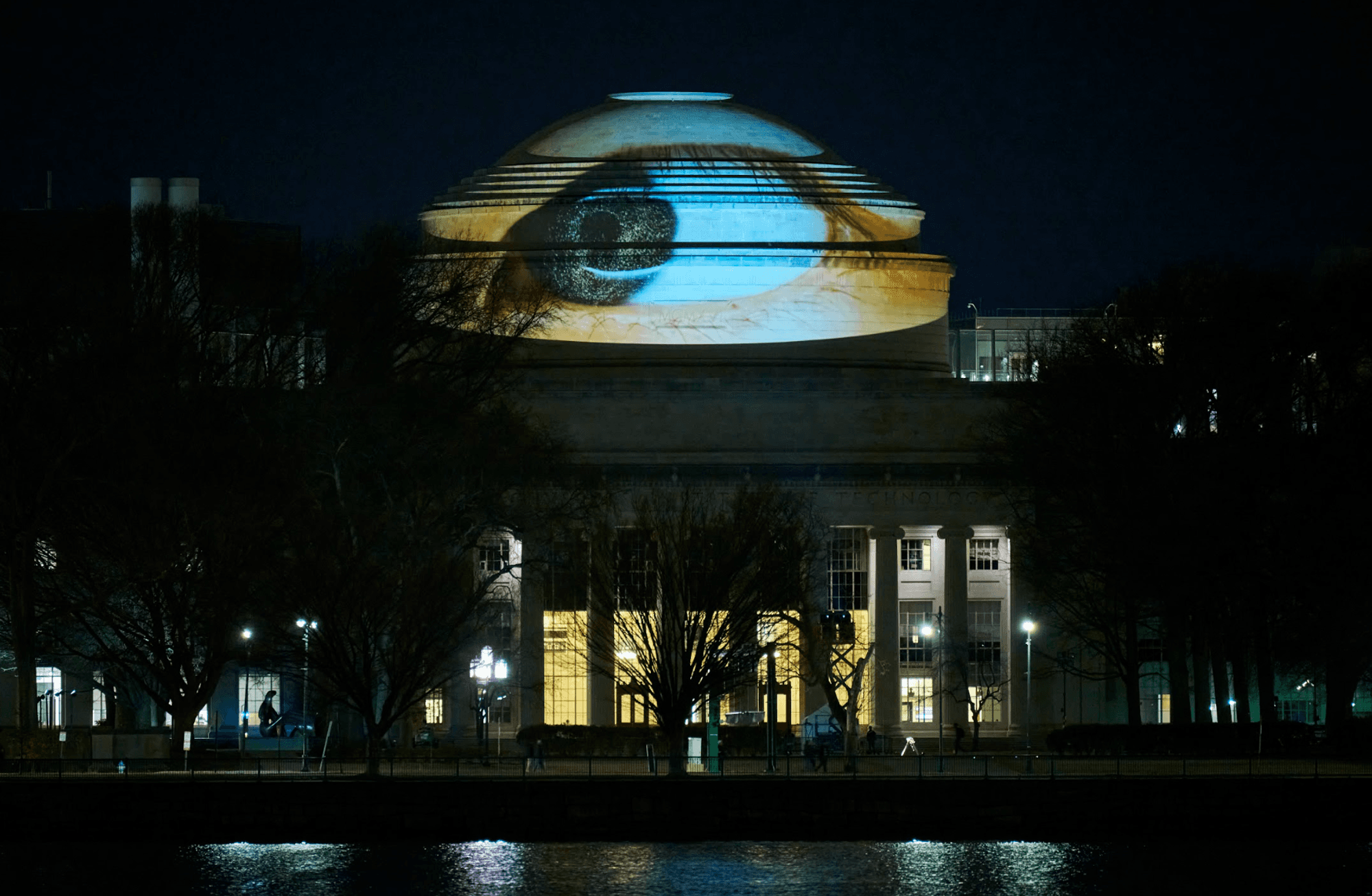
Gaze to the Stars: A conversation with Behnaz Farahi on reimagining storytelling with AI


"Rather than diminishing our sense of empathy, these technologies can act as co-creators, helping us explore new modes of interaction and self-reflection."
I set down Behnaz Farahi at MIT Media Lab's Critical Matter Group office, where she was working on her team's latest project, Gaze to the Stars. Her latest installation transforms individual narratives into a collective experience, using artificial intelligence to capture personal stories and project them as dynamic, visual compositions into the MIT Dome. From the moment our conversation began, I felt a deep intimacy. Behnaz Farahi is an artist of today who, despite addressing such sharp and critical issues, approaches them with extraordinary grace, whether through the lens of art and design or the sensibility of software and robotics. Clearly, our shared cultural ties, coming from geographies with intertwined histories where eyes carry deep symbolic meanings, created an instant connection.
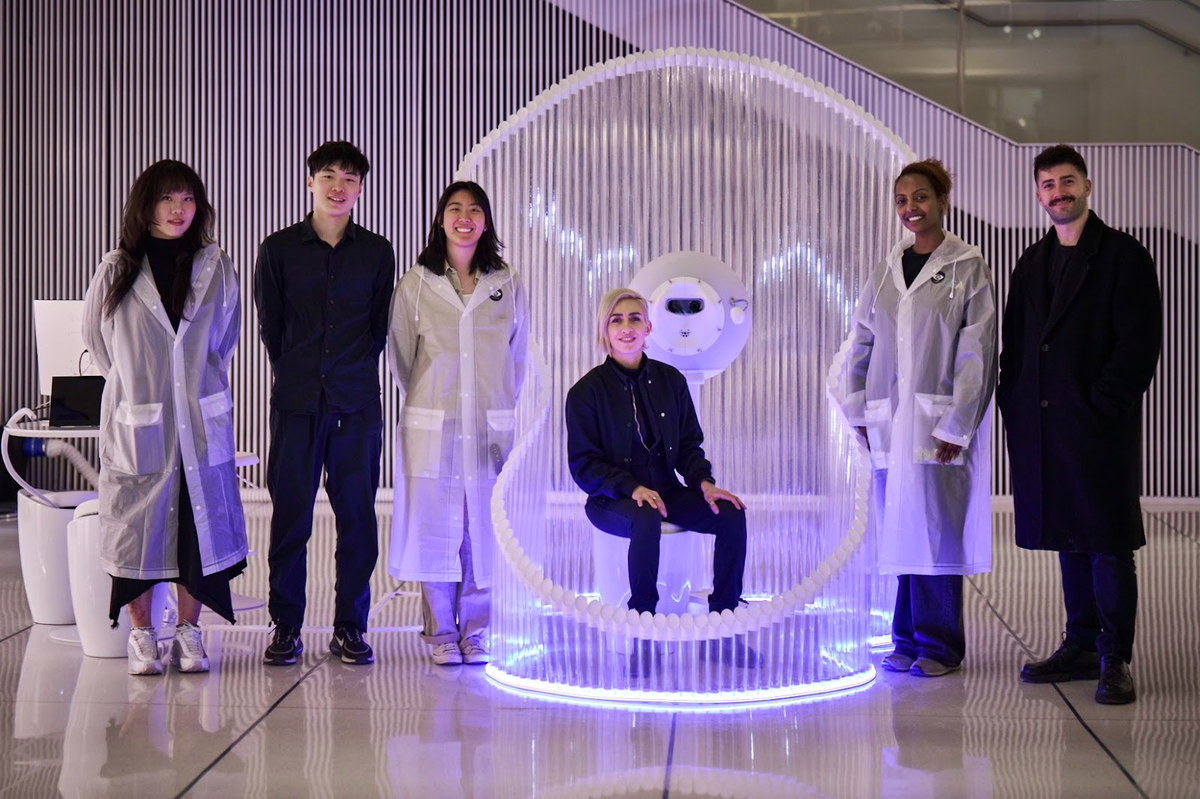 Behnaz Farahi with Critical Matter Group, “Gaze to the Stars” Immersive Pod, MIT Media Lab
As we spoke, our conversation centered on the symbolism of eyes, technology’s evolving role in storytelling, and how AI is automating processes and shaping human dreams, aspirations, and interactions. How can we ensure AI remains a tool for amplifying human experience rather than diminishing it? That question lingered as I became part of the project’s early testing phase—watching my own thoughts, challenges, and hopes materialize within Farahi’s vision.
My experience with their latest project, Gaze to the Stars, was deeply immersive, seamlessly blending technology and storytelling. The integration of AI, large language models (LLMs), eye recognition, and scanning created a profound sense of connection in an Immersive Pod. I’m genuinely intrigued to see how these elements will come together to shape a collective narrative. The experience was intimate, almost surreal. In that moment, I wasn’t just an observer; I was inside the story. Our conversation follows an exploration of design, storytelling, AI, and the fine line between automation and emotion. But first, let’s step back and understand the mind behind these thought-provoking creations.
Farahi's story
Behnaz Farahi’s journey is a testament to the power of interdisciplinary creativity and technological innovation. Born and raised in Tehran, she was fascinated by drawing and building mechanical objects from an early age, an inclination that would later define her unique approach to design. Her path led her from studying architecture in Iran to the dynamic creative landscape of Los Angeles, where she pursued a Master's Degree in Architecture followed by a PhD in Interdisciplinary Media Arts and Practice at USC. Today, she is an Assistant Professor at MIT Media Lab and leads the Critical Matter Group, a research Group exploring the intersection of AI, design, and social justice. Her work blends architecture, fashion, interaction design, and wearable technology, pushing the boundaries of how humans interact with their environments.
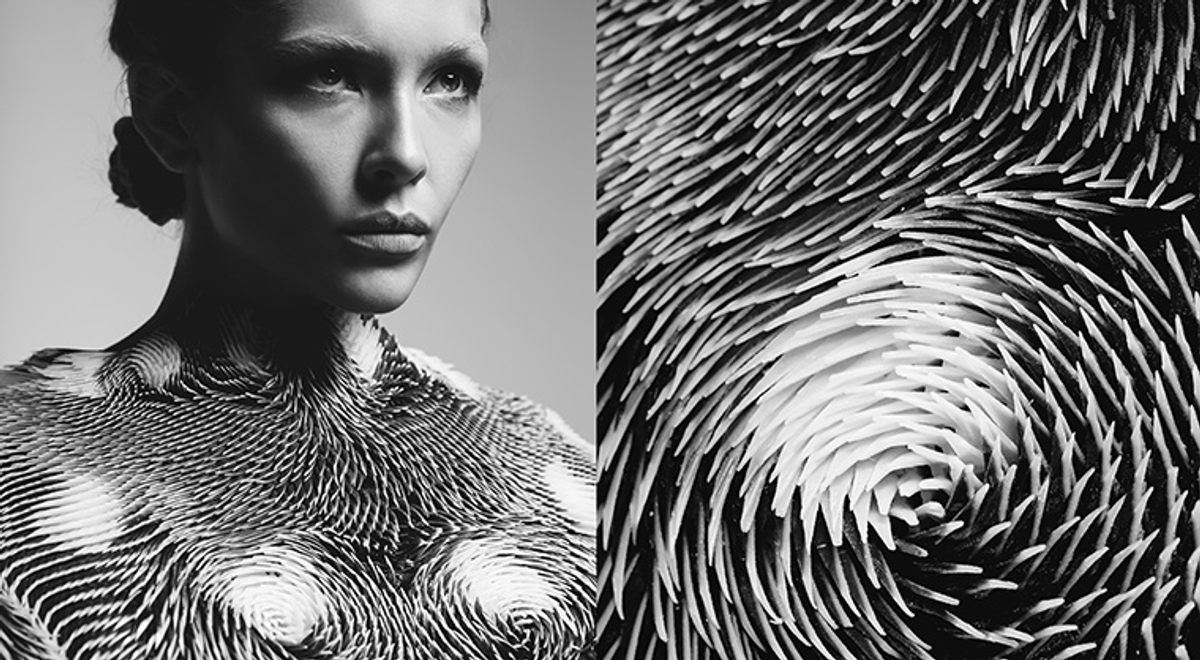
Caress of the Gaze by Behnaz Farahi
One of her most compelling projects, “Can The Subaltern Speak?”, reimagines Persian masks once used by marginalized women during Portuguese colonial rule. In Farahi’s version, these masks are no longer static objects; they move, respond, and communicate through AI-powered blinking patterns using morse code. This transformation challenges historical silences, turning passive artifacts into active, self-expressive agents.
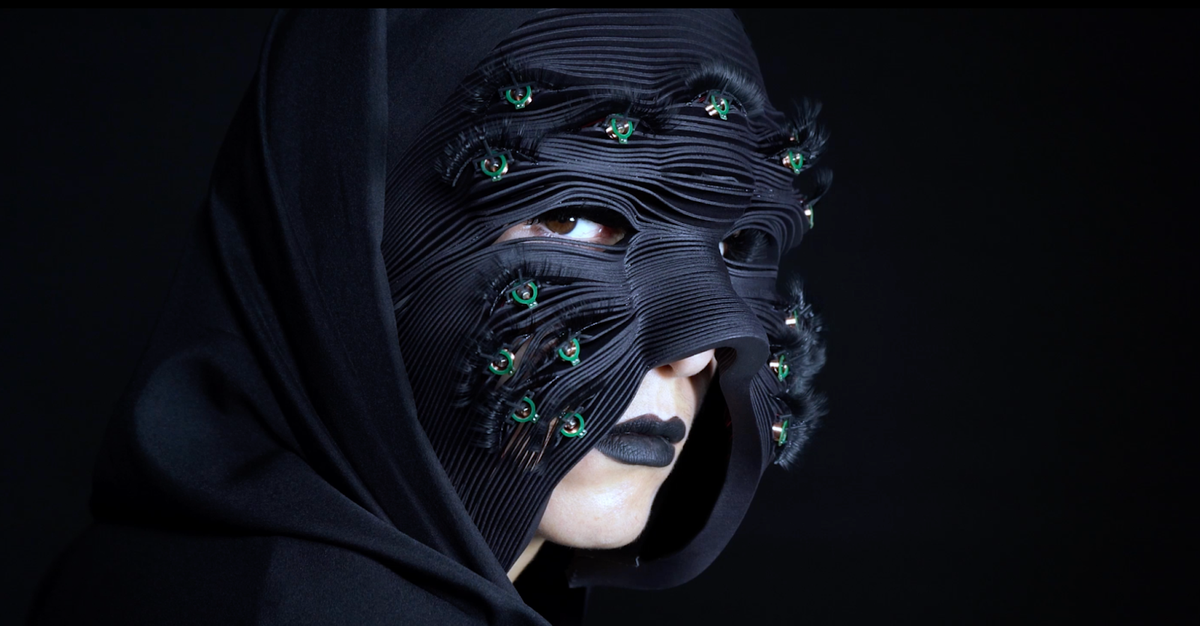
“Can The Subaltern Speak?” by Behnaz Farahi
Role of technology
Her portfolio is as diverse as it is groundbreaking, collaborating with NASA on 3D-printed structures for extraterrestrial environments, crafting interactive garments that respond to human emotion, and designing installations that provoke thought on surveillance, agency, and digital identity. Farahi’s work isn’t just about technology, it’s about how technology shapes how we perceive ourselves and others.
Artificial intelligence is pivotal in her projects, enabling interactive and communicative systems. In Can The Subaltern Speak, AI-based algorithms recognize masks and allow them to respond to each other through blinking patterns—turning fabric into a storytelling tool. Similarly, in Mesolite, facial recognition and tracking technology interpret human expressions, translating them into real-time responses. This interaction allows the audience to engage in direct empathy. So, she was right; if we cannot witness the reflections of a mind, we cannot empathize.
Behnaz Farahi's work at Milan Fashion Week was the project Returning the Gaze, which was showcased in 2022 for the ANNAKIKI brand. Returning the Gaze was a cyber-physical robotic installation that explored themes of surveillance, being watched, and challenging the male gaze in the fashion industry. The installation featured a wearable helmet-like piece equipped with robotic arms holding four screens that magnified a model’s eyes, confronting viewers with an unsettling yet thought-provoking dialogue on visibility and power.
Her exhibition at the Istanbul Archaeological Museum was part of the group exhibition Ancient Futures, which opened in October 2022. In this exhibition, Farahi was featured alongside internationally renowned artists such as Liam Young, Theo Triantafyllidis, David O'Reilly, and Jonathan Monaghan. Ancient Futures aimed to question how we construct future mythologies and archaeological remnants by drawing inspiration from historical narratives and cultural heritage.
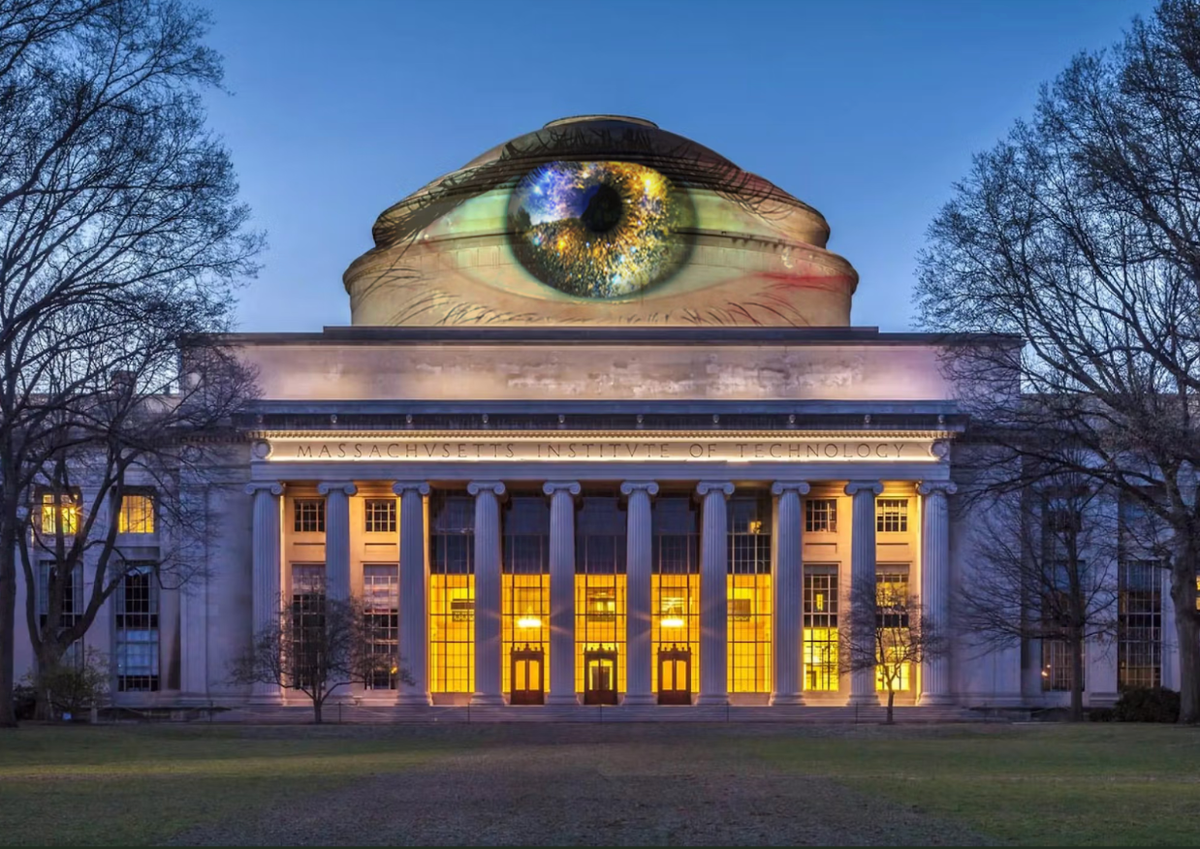
Gaze To The Stars, the very last project of Behnaz Farahi. Venue: Exterior of MIT Dome
'Dismantle the structure'
Your work explores the intersection of technology and human emotion, aiming to foster empathy between the body and its environment. But does AI truly deepen our sense of empathy, or does it risk making it feel artificial and pre-programmed? As AI-driven interactive systems evolve, could they limit human intuition and authenticity rather than enhance them? (Because it's a system already with advanced reasoning, but I wonder if it will diminish our human powers.)
This is an important question. I see AI and computational design not as replacements for human intuition and authenticity but as extensions of our cognitive and emotional capacities—what Andy Clark and David Chalmers call the extended mind. Rather than diminishing our sense of empathy, these technologies can act as co-creators, helping us explore new modes of interaction and self-reflection.
Of course, there is always a risk that AI could lead to the automation of human experience in ways that feel artificial. But if designed critically and thoughtfully, these systems can heighten our awareness, challenge our assumptions, and create deeper, more meaningful engagements between people and their environments. The key is ensuring that AI enhances our agency rather than constraining it.
The simulation hypothesis and AI singularity theories suggest that they could radically change how humans perceive reality. As someone working in design and interactive technologies, do you think AI-based systems might develop their own "creative autonomy" in the future? If this happens, how will the roles of artists and designers change?
The idea of AI developing its own creative autonomy is fascinating, but I believe creativity is always shaped by context, culture, and human experience. While AI can generate novel patterns, structures, and even unpredictable outputs, it does so based on existing data—it doesn’t possess intuition, emotions, or lived experiences.
That said, AI is already transforming artistic and design practices. Instead of replacing artists and designers, I see these technologies as co-creators that extend our capabilities, allowing us to explore new aesthetics, forms, and interactions that were previously unimaginable. The role of the designer, then, might shift toward curation, orchestration, and collaboration—shaping the frameworks within which AI operates, rather than simply creating from scratch.
Ultimately, the question is not whether AI will have creative autonomy, but how we choose to engage with it: as a collaborator.
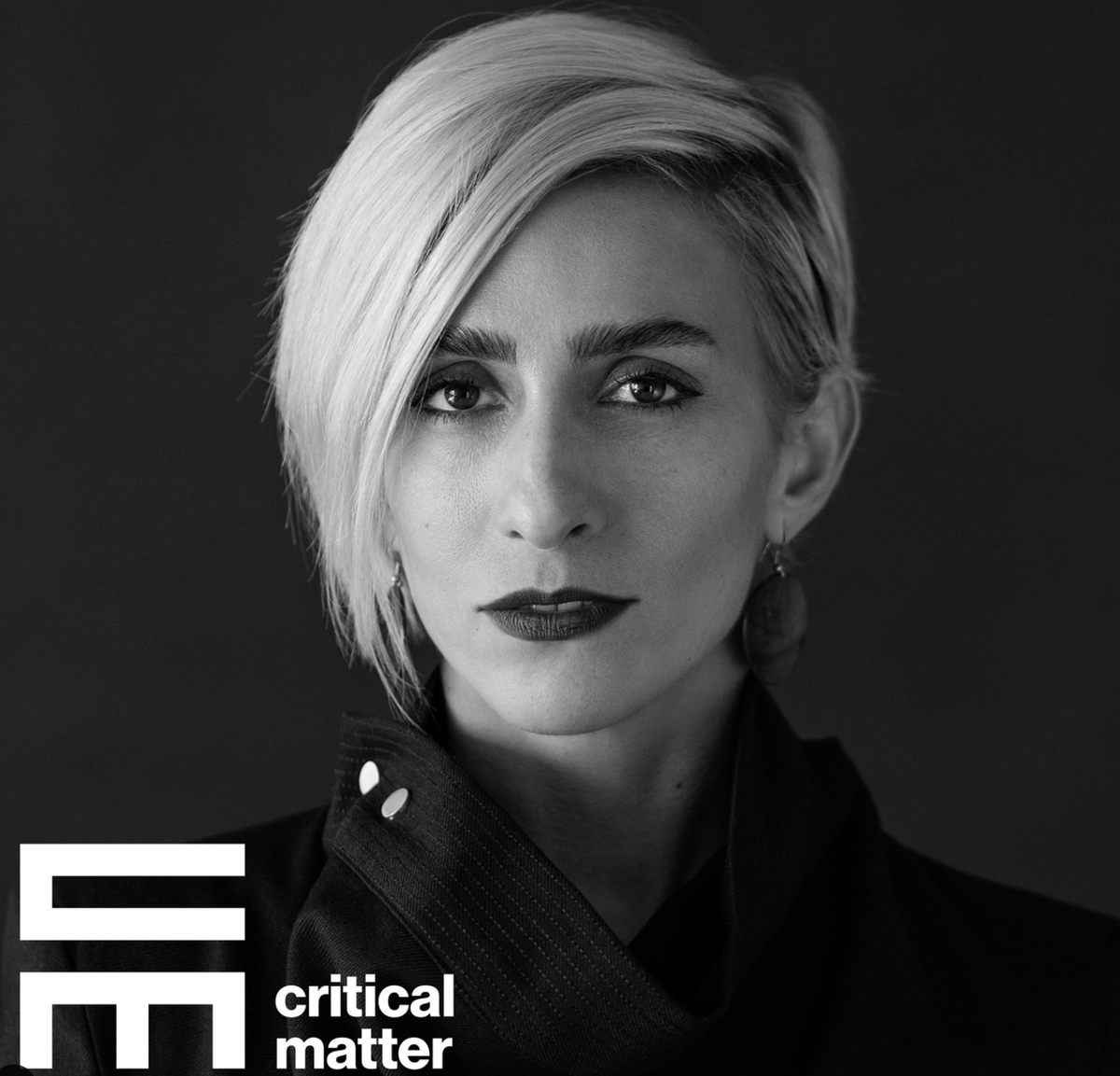
Behnaz Farahi | Photographer: Vika Petlakh
Feminism is an integral part of your projects. AI-generated design is still largely shaped by a historically male-dominated tech industry. How does this impact feminist design principles, and what can be done to reshape these processes to be more inclusive actively?
For me, this means designing technologies that don’t just observe and categorize but engage, empower, and challenge—creating systems that honor agency, and multiplicity. The goal is not just to include a female perspective but to dismantle the structures that have excluded it in the first place.
In Gaze to the Stars (our latest project), we use AI to collect and share a diverse range of personal stories, turning the MIT Dome into a storytelling canvas. Through AI-driven immersive pods, participants voice their dreams, struggles, and longings, with their words encoded into visual projections inside their eyes. This project challenges traditional narratives of success and highlights resilience, vulnerability, and transformation—ensuring that technology serves as a tool for amplifying diverse human experiences rather than reinforcing existing biases.
Beyond individual projects, your Critical Matter research group is deeply engaged with broader social and technological issues. What are you focusing on in 2025, and which of your upcoming projects do you think will have the biggest impact?
Our focus is on how design can address pressing social issues and create more inclusive, empathetic interactions between humans and machines. One of our most significant projects this year is Gaze to the Stars, where we use AI to collect and share a diverse range of personal stories, transforming the MIT Dome into a storytelling canvas.
Beyond continuing this research, Critical Matter continues to investigate the intersection of AI, embodiment, and social justice, particularly in how computational systems shape identity, agency, and feminism. We aim to foster more critical technological futures through our research and design interventions.
I imagine that future distinctions between robotic and biologically-based humans will be more nuanced. I hope we approach them as new forms of expression—ways to rethink identity, agency, and what it means to be human.
Do you envision a new human form emerging? As technology blurs the lines between human and machine, will we develop external markers, whether aesthetic, functional, or biological, that visibly differentiate those who remain fully human from those who integrate robotics or AI into their bodies?
From my perspective, I see the future of the human form as fluid and continuously evolving, shaped by both biological and technological interventions. In my work, I explore how materials, wearables, and AI-driven systems can expand human capabilities—whether through adaptive garments, expressive surfaces, or interactive forms that blur the boundary between body and environment.
As technology further integrates into our body, I imagine that future distinctions between robotic and biologically-based humans will be more nuanced. I hope we approach them as new forms of expression—ways to rethink identity, agency, and what it means to be human in an increasingly hybrid world.
What excites you and your team the most in science and technology beyond your domain in 2025?
What excites us the most is the intersection of biotechnology and material intelligence—how materials could not only sense and respond but also compute in ways that mirror living systems. We are particularly fascinated by how biological principles can inform new forms of design, moving beyond static structures toward materials that adapt, evolve, and learn to see the world around themself.
Your lab bridges fashion, architecture, and interactive design with storytelling. What are the guiding principles behind your work? How do you balance technology with human experience to create spaces that foster connection and reflection?
At Critical Matter, our guiding principle is critical thinking—using technology not for the sake of innovation alone, but as a tool to address larger social, cultural, and environmental issues. We believe in designing with intention, questioning dominant narratives, and ensuring that technology serves as a means of empowerment rather than control.
Our work bridges fashion, architecture, public art and interactive design, but always with a focus on human experience—how bodies move through space, how materials interact with emotions, and how we can create dynamic, responsive environments that foster connection and reflection. Rather than pursuing techno-optimism or technological determinism, we prioritize empathy ensuring that our projects contribute meaningfully to the world around us. For the hope of more peaceful future!
What kind of future do you envision for fashion and architecture? What designs could comfort every person in different geographies, shift perspectives, or bring instant happiness?
I envision a future for fashion and architecture that moves beyond the idea of "instant" solutions—especially when it comes to comfort or happiness. Designing with the expectation of guaranteeing happiness risks falling into the trap of techno-optimism, where we assume technology alone can solve deeply human and cultural complexities. Instead, I believe we need to cultivate more nuanced spaces—spaces where contentment, peace, and emotional depth can naturally emerge over time.
In Gaze to the Stars, for example, we explore how architecture and technology can foster a sense of connectedness by amplifying diverse human experiences rather than dictating a predefined emotional response. Ultimately, the role of design is not to manufacture happiness but to create conditions where people can find meaning, and a sense of belonging on their own terms.
If you could recommend a book, a movie, a scientist or philosopher, an artist, and one city, what would they be?
One book that has lately resonated with me is Radical Acceptance by Tara Brach. In the midst of a fast-paced and often overwhelming world, I have found mindfulness practices not just valuable but necessary. Brach’s work offers profound insights into self-compassion and presence, reminding us that true transformation—whether personal or societal—begins with acknowledging our reality with openness and kindness.
For an artist, I am inspired by the work of Krzysztof Wodiczko, whose work powerfully engages with themes of public memory, marginalized voices, and technology as a means of social critique. His large-scale projections challenge us to rethink public spaces as sites for dialogue and resistance, something I find deeply relevant to my own explorations of interactive design.
The eyes never lie
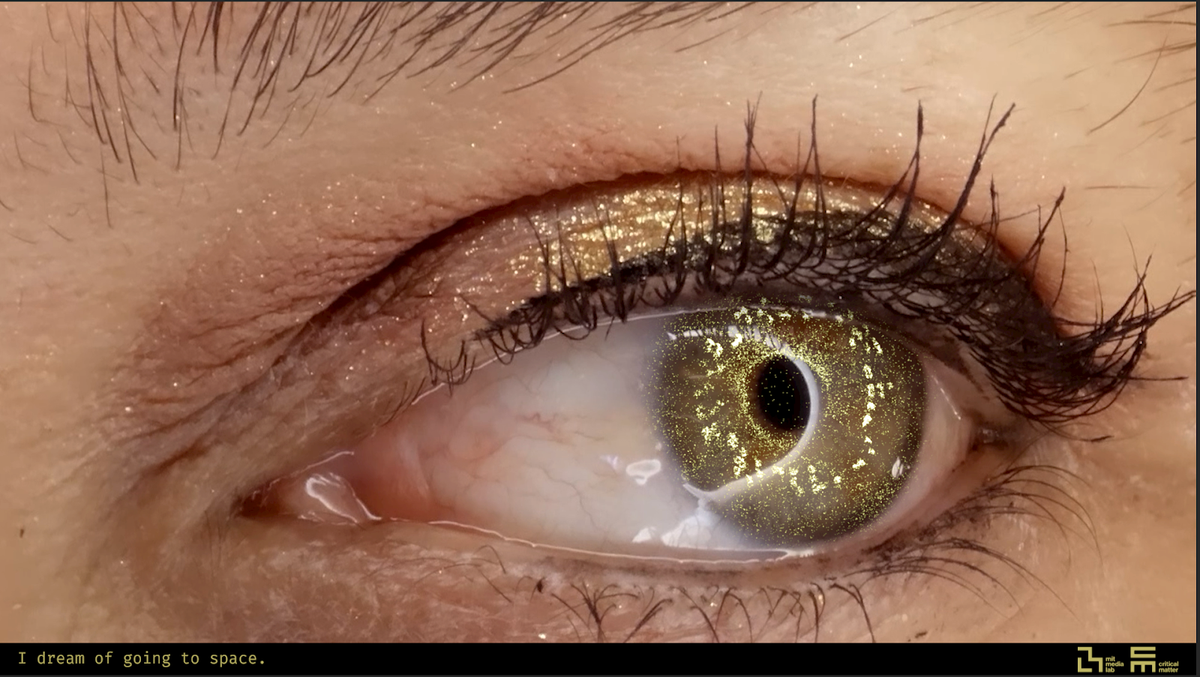
“Gaze to the Stars” Immersive Pod captured my dream and my eyes on the stars.
Farahi’s latest work, Gaze to the Stars, which I had the chance to experience firsthand at the Critical Matter Group, envisions transforming the MIT Dome into a living canvas that reflects the resilience and aspirations of individuals who have shaped—and been shaped by—the MIT experience. Inspired by the motto "Per ardua ad astra—Through difficulties to the stars," the project aims to make the dome "look back" at the community, sharing dreams and revealing untold stories of struggle and triumph.
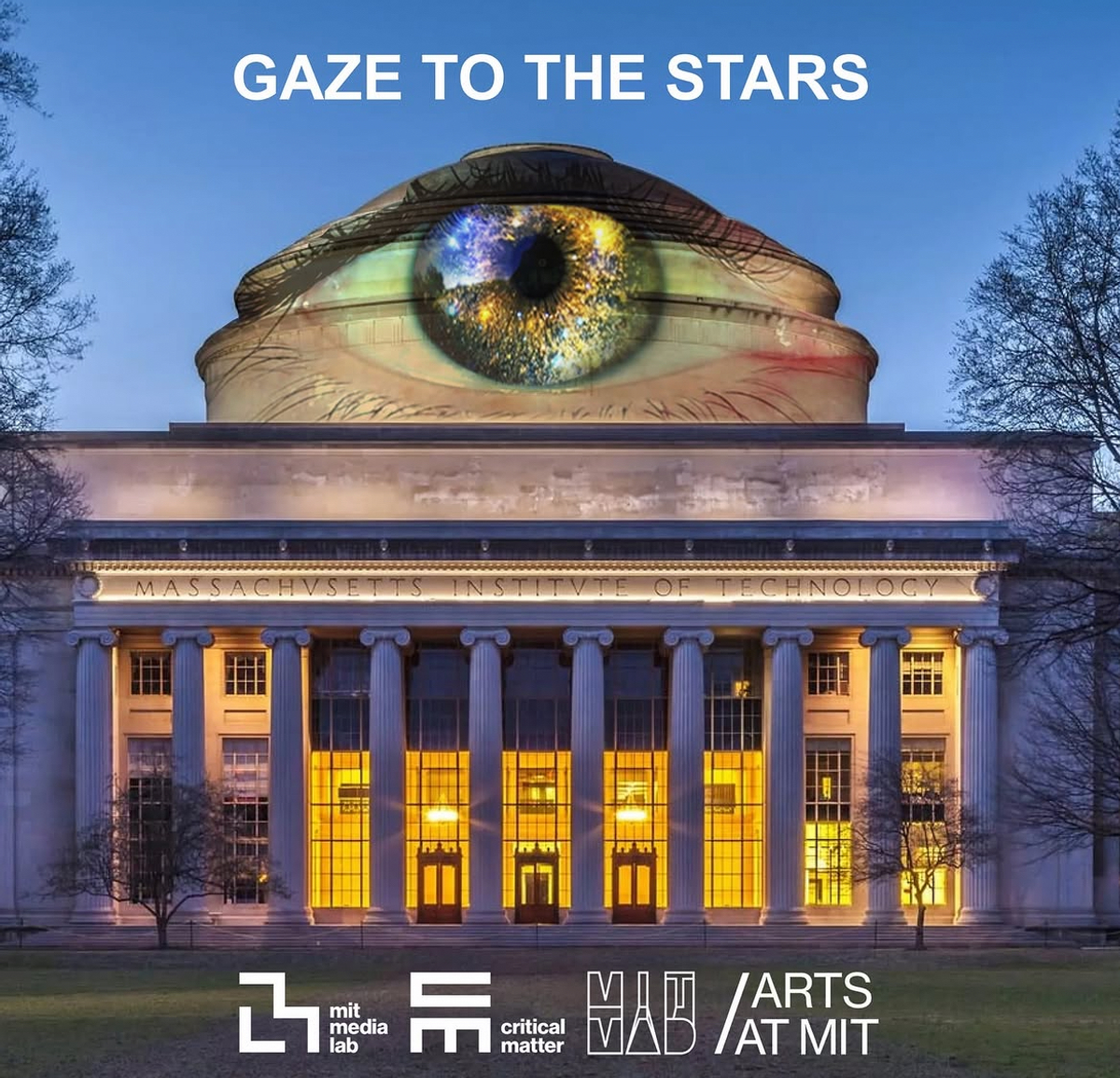
“Gaze to the Stars” Immersive Pod captured my dream and my eyes on the stars.
In the days leading up to the installation, AI-driven immersive pods travel across campus, inviting participants to recount their personal journeys, while eye-tracking technology captures close-up videos of their gaze. As their words unfold, they are translated into a coded visual language, embedded within their own eyes, and then projected onto the dome as dynamic, evolving constellations of human experience. Through augmented reality, viewers beyond campus can even unlock hidden narratives, deepening their engagement with the installation. More than a spectacle, Gaze to the Stars is a monument to resilience and collective memory, challenging conventional narratives of success and ensuring that voices—both past and present—are seen, heard, and illuminated in the night sky. Running from March 12–14, 2025, this ambitious project underscores Farahi’s commitment to designing technology not just as a tool, but as a means of storytelling, empowerment, and connection.
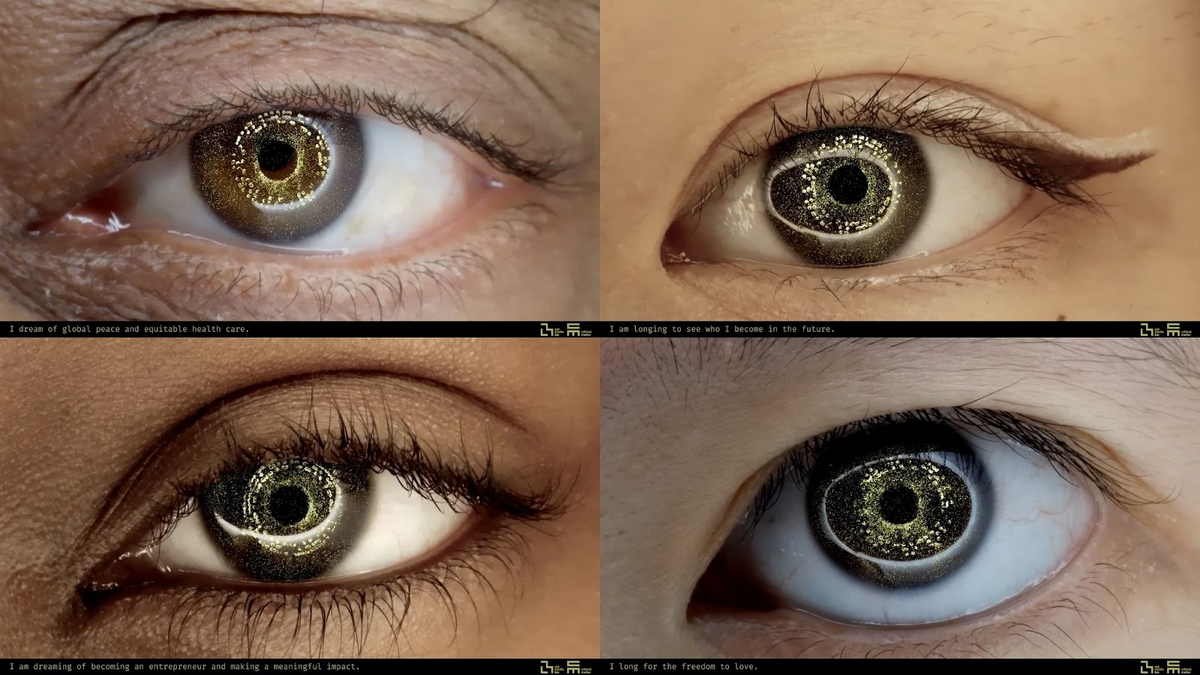
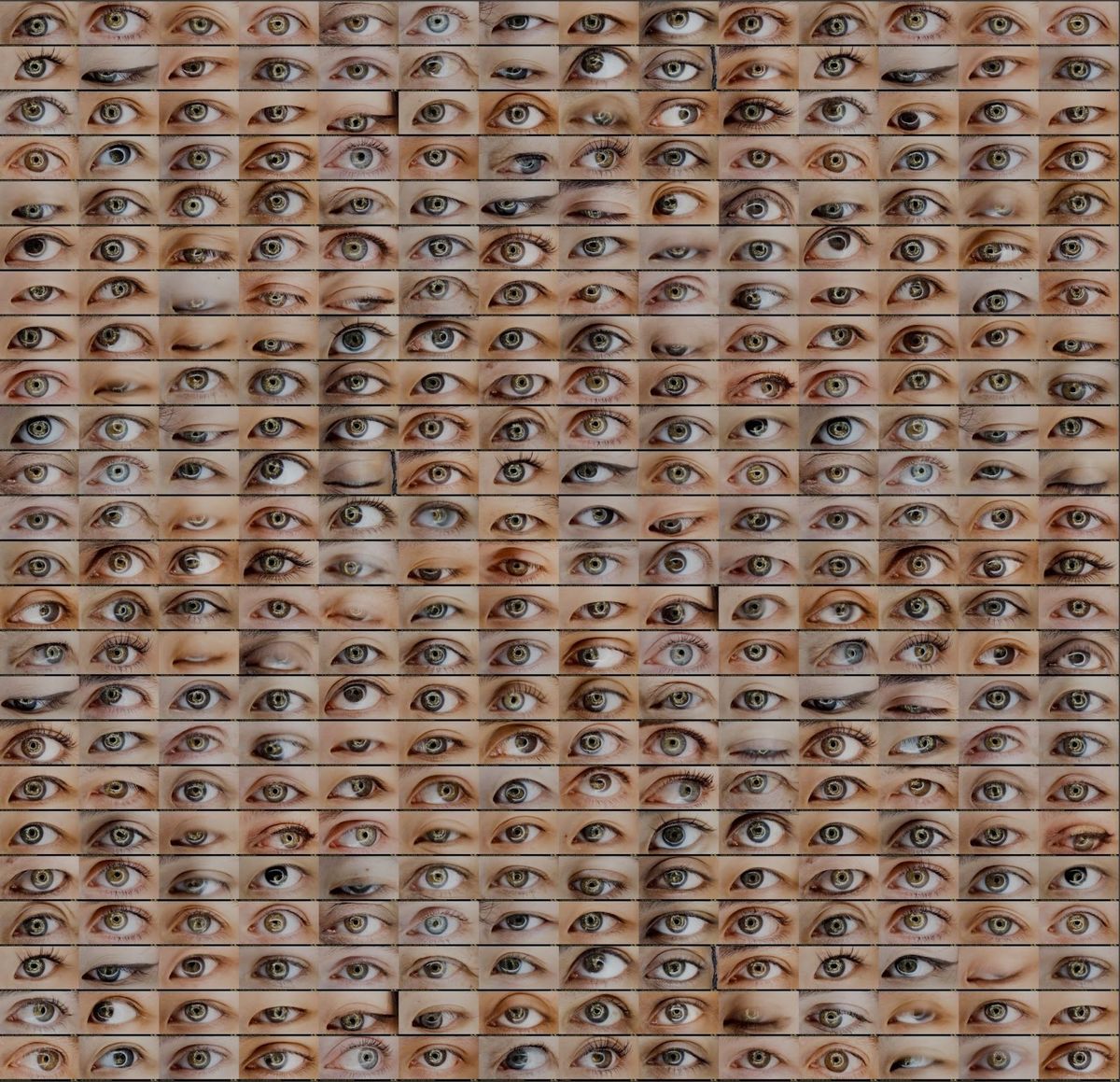
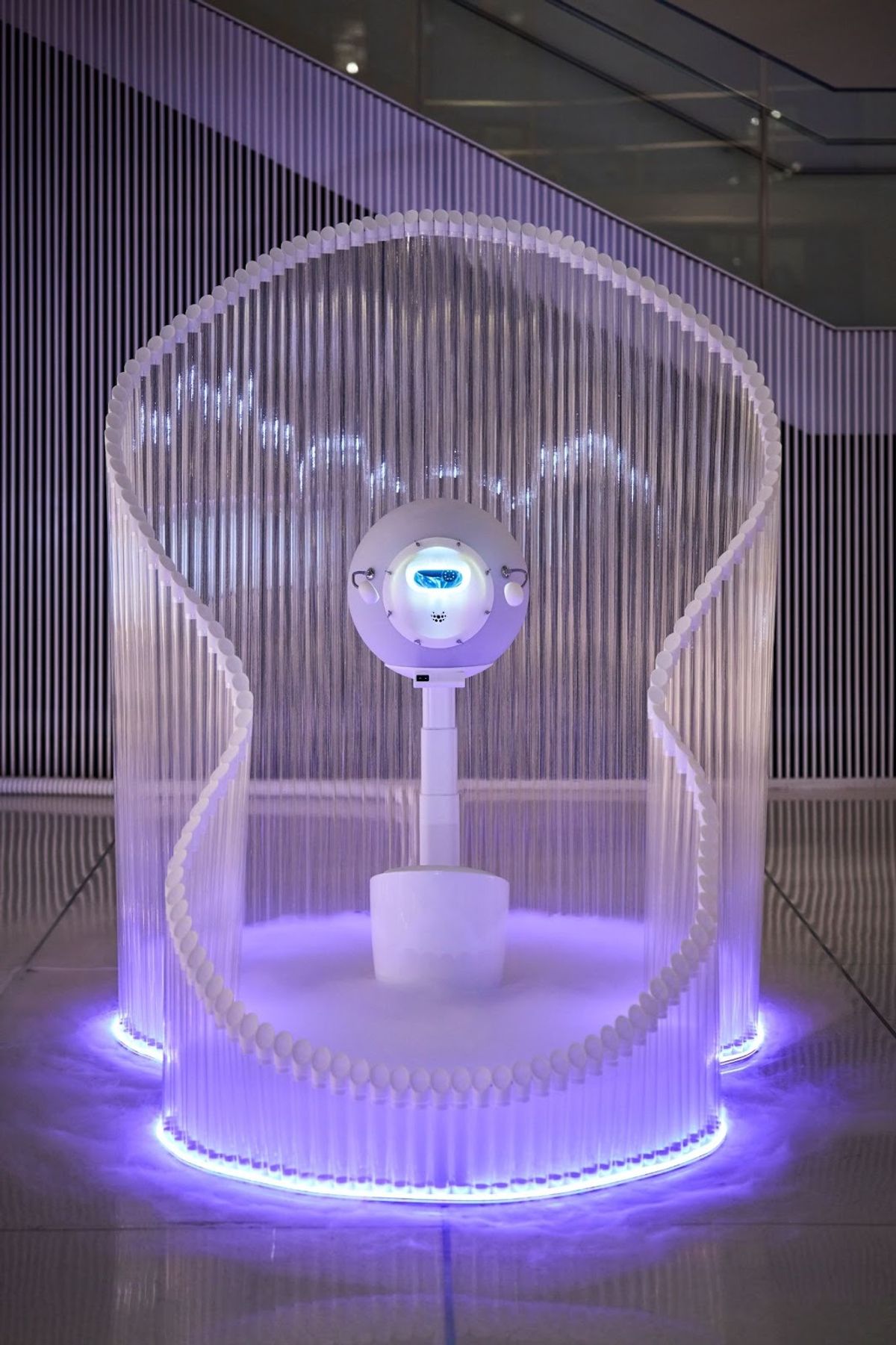
Photo credit : Behnaz Farahi


Kaydet

Okuma listesine ekle
Paylaş
YAZARLAR

Çiğdem Öztabak
Teknoloji ve kültür yazarı, serbest gazeteci. New York'da yaşıyor.

Aposto World
This newsletter offers a comprehensive overview of global events from each continent, curated from diverse international media sources. On Mondays, you will receive Aposto World in your inbox and we will give you only the relevant information on just the important stuff, from an Istanbul perspective.
İLGİLİ OKUMALAR