




On the function of literature with Édouard Louis: 'Bourgeois culture is a tool of violence'


 Aposto World
This newsletter offers a comprehensive overview of global events from each continent, curated from diverse international media sources. On Mondays, you will receive Aposto World in your inbox and we will give you only the relevant information on just the important stuff, from an Istanbul perspective.
Édouard Louis is a brave and award-winning writer. In 2014, when he was only 22 years old, he published The End of Eddy, a novel that established him as one of the most important figures in contemporary French literature. Since then, he has been writing with brutal clarity about his journey from a poor village in Northern France to the Parisian intelligentsia.
Now his books are translated into dozens of languages, adapted for theater, and a Netflix series is on the way. Judging by the attention he received during his interview at Moda Sahnesi, he is no longer a writer, he has become a phenomenon. But Louis is not only popular; he is already mentioned alongside the likes of Annie Ernaux, Didier Eribon and Ken Loach. For many, it is only a matter of time before he wins the Nobel Prize.
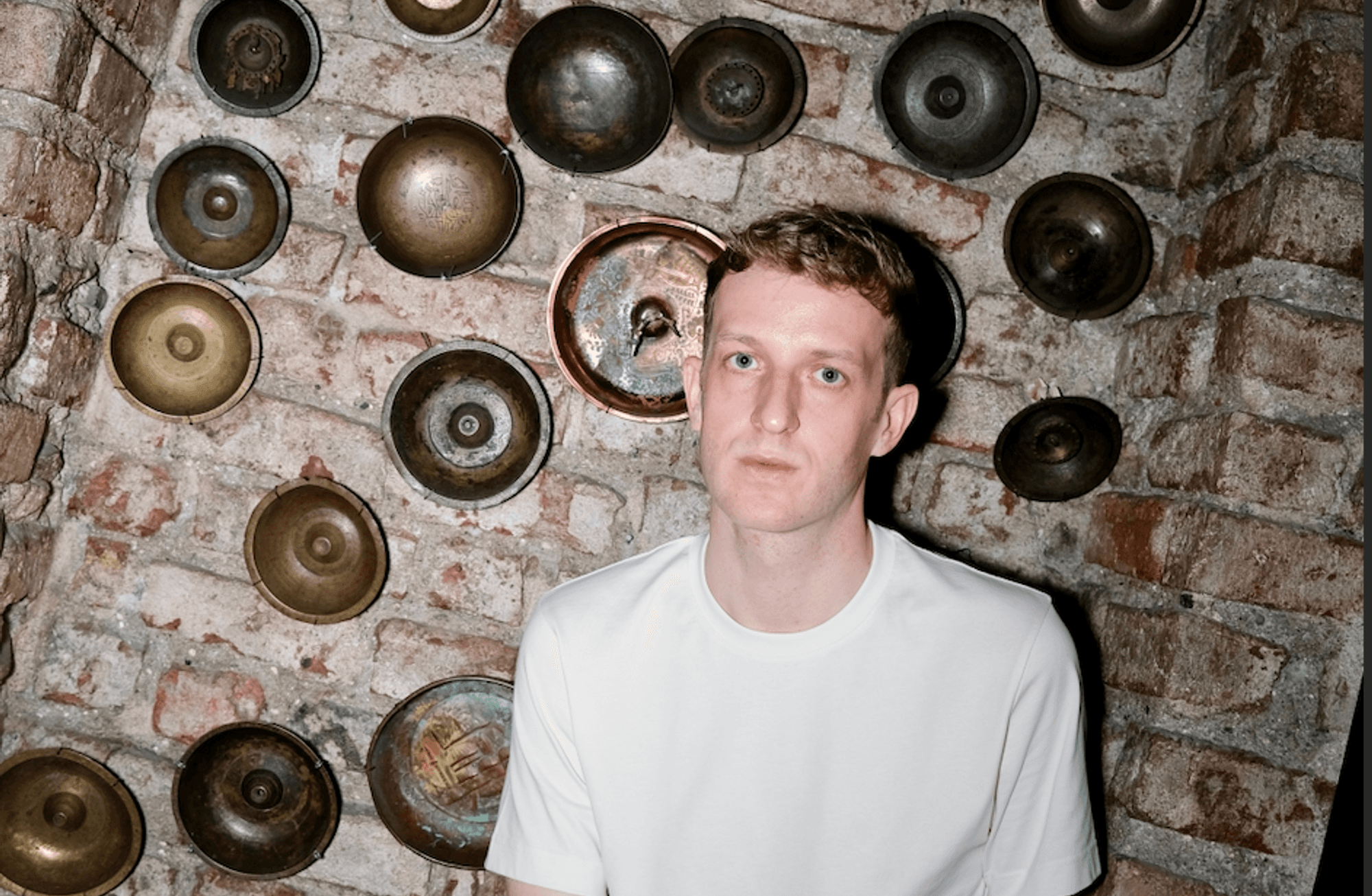
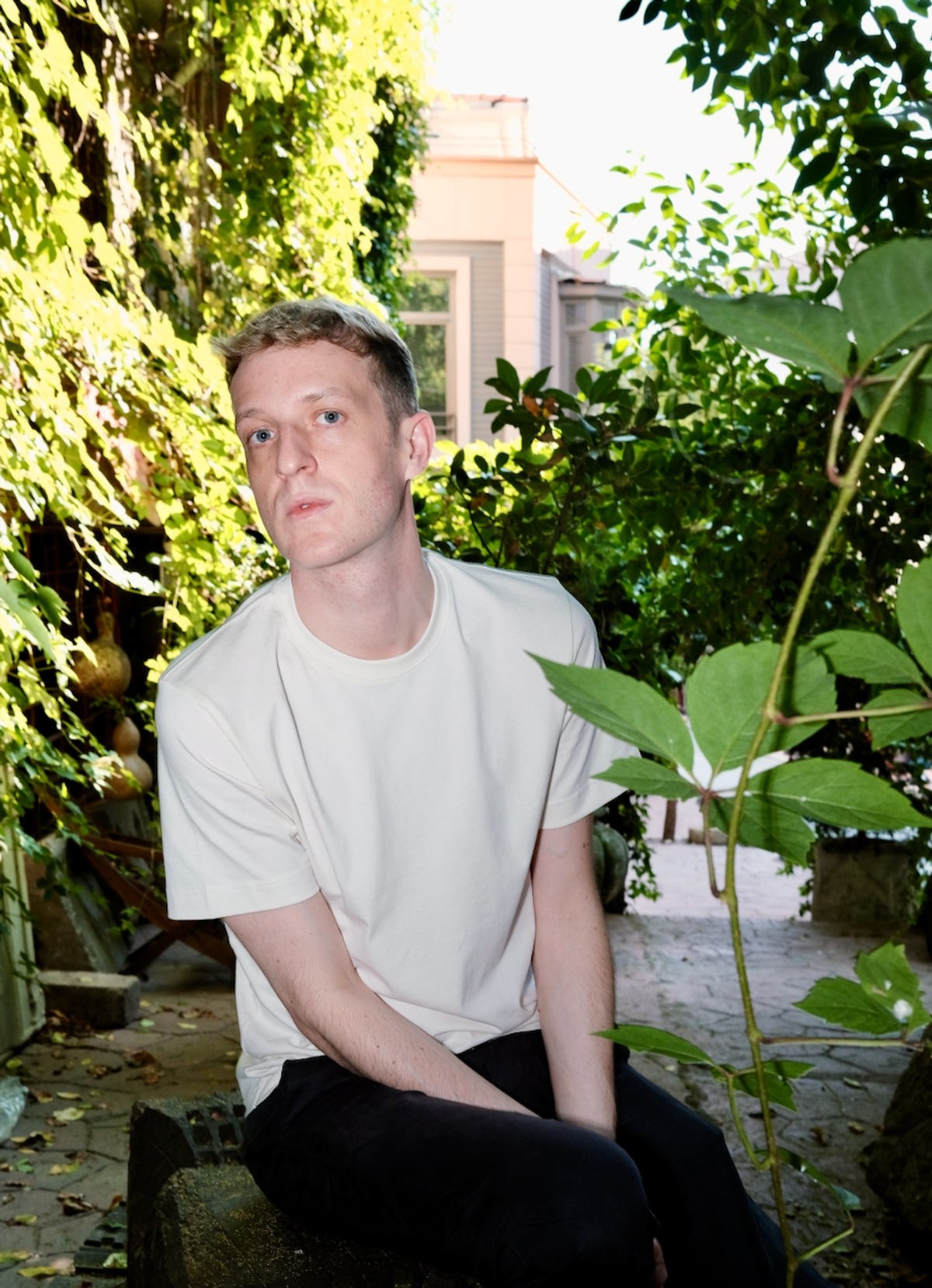
We agree to meet Édouard Louis in the lobby of the hotel where he is staying in Istanbul. But we meet not at the hotel, but on the slopes of Çukurcuma: Louis, in his ecru t-shirt and New Balance shoes, carrying a grocery bag with two small water bottles, walking along, humming a song softly... When I introduce myself, he greets me with a sincere smile, and soon we order a cold coffee and find a seat where we can shelter from the scorching midday sun. We start a conversation that lasts for almost an hour and a half, ranging from the cost of class advancement to shame and the imagination of a new left.
When I listen to Louis, his eyes catch my attention the most: They are icy blue and he stares into them almost without blinking. I can't help thinking how similar this is to his literature. This is how Louis describes poverty, violence, the working class - with a clarity and honesty that doesn't allow you to look away.
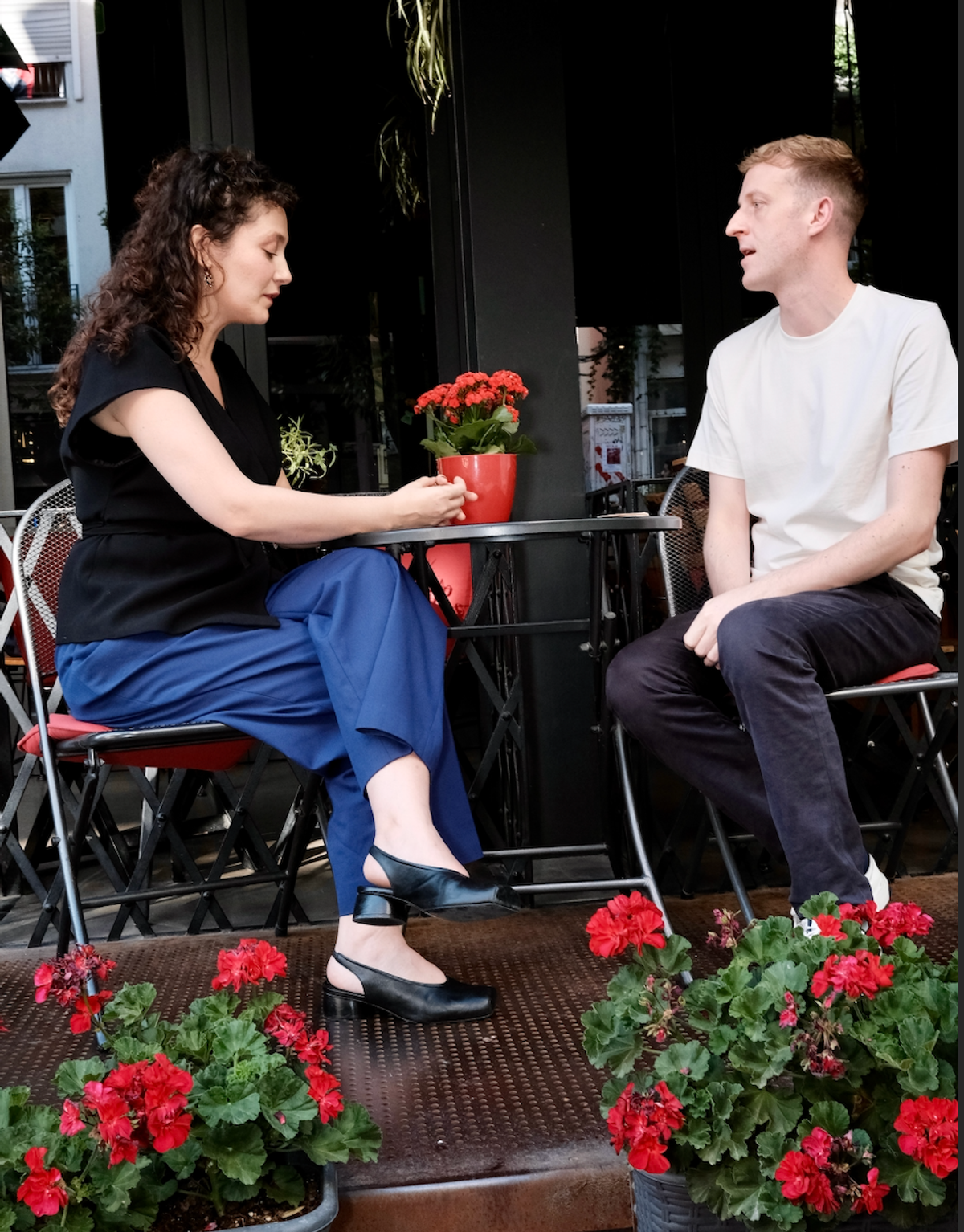
Photos: Yağmur Genç
You can read this interview as a portrait of a writer, a reckoning with provincialism or a notebook on the class issue. All are possible. All are true.
You talked about the village you grew up in, your family, your past in a harsh language. Do you ever go back to your hometown?
No. I feel like they'd take a baseball bat and kill me. I'll never go there.
Do you wish you could go back?
I went once, actually. At night. I went in disguise. I realized there was no way I could go back. It's not a geographical thing. Even if you are there, if your body has changed, your language has changed, your personality has changed, your perception has changed... You think you can go back but... It's like you're in front of a photograph. You're not part of it anymore. And it was a very cold feeling. It was very melancholic.
Did you get permission from your family, your environment before writing your books?
At first, I didn't buy them. We don't read books in our family. Of course, later I asked for permission for some books and my mother said, "Okay." I never asked my father's permission because I don't feel any responsibility towards him. I don't ask permission from someone who is violent. I don't believe in the approach that is very fashionable right now, "Everyone should tell their own story, let's not speak for others." To my working class ears, this always sounds naive, superficial and bourgeois. This may be true for bourgeois people who have the means to make sense of life. But not for poor families like ours. My mother does not associate her experiences with male domination because she does not have access to feminist theories. If she had written her own story, she would have ignored this structural violence. I try to show what they cannot see. Sometimes it is necessary to speak for others.
Speaking for others can sometimes be tantamount to usurping their voice, can't it?
Exactly, you have to be very careful, it all depends on the context. Who speaks for what is very important. In France, for example, the government speaks for the working class, but in a conservative way, to restrict social rights. Or others have spoken for a long time about homosexuality, which has led to problems of representation. Politics is not fixed, it is constantly changing. The important thing is to be able to see these differences.
I feel like there's an asymmetry between you and me when we sit across from each other as strangers. I know so much about you, so clearly... Your father, your traumas, your secrets about your body. And you either remember my name or you don't. How does that feel?
I use my experiences to talk about structural issues such as class, poverty, male domination, etc. I don't put the really intimate things in the books, precisely because of that - because I don't think they have any political, social or collective significance.
So how do you separate the personal from the political? It doesn't sound as easy as you make it sound.
It is not easy because the boundary between the personal and the political or the social is not a natural boundary. It is constantly changing historically and socially. For example, when Simone de Beauvoir wrote The Second Sex, she was criticized and not considered political. For them, the real politics was class struggle, not issues related to being a woman. So what Simone de Beauvoir did was to change that boundary between the private and the political. The distinction between these two realities is something that needs to be constantly questioned.
You are associated with the tradition of auto-fiction, which has attracted a lot of attention in recent years, but from what you tell me, I get the feeling that you keep your distance from this genre. There is a sense that you separate the personal from the political and collective.
I don't feel I belong to this category. Because I write neither autobiography nor fiction. Autofiction aims to blur the boundary between reality and fiction. I don't want that, because I want to face the truth. That's why what I write can be more shocking, because people know it's not fiction, they can't escape.
So, for you, literature exists not to create a sense of purification or consolation in the reader by representing violence, but to make it intolerable? Does it have no purpose to transform violence or life?
On the contrary. Literature should not cover violence, it should bring it into our eyes. Because most of the time we think violence is the natural state of life. For me, literature is about making this normalized violence visible and making it impossible to get used to it.
In your books I feel a tension between the aesthetic expectations of literature and the urgency of politics. Do you think I am saying this because I have been exposed to too many bourgeois definitions of what literature should be?
What we call reality does not stand ready outside, we construct it. When you go out on the street, you only see fragments, but if a sociologist, for example, explains the differences between poor and rich neighborhoods, who has access to hospitals, who reads books, you will understand the truth better. Literature, too, has to build an aesthetic form to get closer to reality. This seems to contradict the political urgency, but it is actually the way to reach it. Aesthetic research has been indispensable for me in all my books, in every one of my struggles.
Many people who have had the experience of "social mobility" by leaving the provinces and confronting the structural contradictions this causes find themselves in your experience. Do you often receive this kind of feedback?
Yes, it makes me very happy. We're like an invisible army. We are everywhere but nobody notices. To have run away from somewhere, to have changed, to not feel fully belonging to the new place, to not be able to return to the old place, but not to be fully where you are now... And there is no political space for this feeling. You can't take to the streets and protest for this, but it is possible to reveal this invisible space by writing a book. And this is as real and painful a struggle as any other political pain. As much as poverty. Because when you change class, you are constantly fighting, hiding, ashamed. It is a never-ending process. And those who are born with privilege just enjoy it. It is very unfair.
You are active in the left. Today it has become difficult for many people to deal with the language of the left. Everything is so vague - it's like you step on a land mine. Whatever you produce, wherever you work, whatever you say, whatever you laugh at, it's as if you've made a mistake somewhere. How do you think a contemporary language of the left can be established that is grounded in class and struggle? Is the weakening of Woke culture a hope?
I understand, but the terms "woke" and "anti-woke" are now empty. Right-wingers belittle demands for justice as "woke," while some parts of the left reduce these debates to personal identities. I don't believe in identity politics either. Being a woman or a homosexual is a matter of life and death in many places, not an aesthetic choice. The current language of the left is alien to me, it is individualistic and sterile, especially on issues of sexuality and gender. What is important is what these identities are used against and what they are used to fight against. If everything becomes personalized, the struggle is lost.
In France, the discourse of seeing the "heterosexual white male" as the enemy is widespread, but my father and my brother were both like that and were victims of the system. This discourse excludes me. On the other hand, after the collapse of the Soviet Union, for years it was said "there is no more class," but now it is coming back; the rise of the extreme right is forcing people to confront class. The true progressive confronts the conformism of both the right and the left; he creates his own way of thinking. Like Sartre and Beauvoir... They were ostracized by both the right and the left in their time.
Many people in the art world automatically assume that they are on the "right side" simply because they are involved in culture. But culture often becomes a means for the privileged to ease their conscience. How do you think art becomes part of the oppressive system and what kind of blindness does this create?
I absolutely agree. I was the first person in my family to go to university, the first person to step into the "cultural world," which includes books, museums, cinema, art. And there I always heard the same phrase: "Culture is wonderful, it builds bridges, it opens minds." But my experience was the opposite. For me, culture was extremely violent. For my mother, seeing someone reading a book symbolized a life she could never have: A life of time, peace, education, access. When she saw a book, she couldn't even desire it - she just felt inferior.
Culture is often an instrument of class violence. That's why when I write, I always ask: How can I turn this violence back on him? How can I build another literature that does not ignore this violence, but on the contrary acknowledges its existence? Because that narrative of "Literature unites" is often just a way for the bourgeoisie to feel good about itself.
But most of those who read you still belong to the bourgeois class. Isn't that a contradiction?
No, I don't. Because I write not only to those who agree with me, but also to my enemies. I want people to confront poverty and class - not for catharsis, but to be uncomfortable. "What is my part in this system?" I'm against the idea that literature should always be elegant and indirect. I don't want to insinuate, I want to show. Being "didactic" or "pathetic," forcing the reader to feel something, is considered an insult in literature, but sometimes I want to suspend the reader's freedom, so that they look at things they don't want to look at.
Working class art is often disparaged for being too emotional and direct. Bourgeois criticism says: "It's too direct, it doesn't give you a choice of emotion." I want to incorporate this hyper-direct, flamboyant aesthetic of working class aesthetics into my own literature.
You say you like working class aesthetics, but in your books you describe your family's watching reality shows or TV series, eating junk food with almost contempt. Do you really think popular culture is so worthless? Is only high culture liberating?
On the contrary, I bring the aesthetics of my childhood to literature. But this means being against both the dominant culture and the oppressed culture. It means using what you take from one against the other, and what you take from the other against the first. I was very influenced by reality shows, and Eddy's End is a form of narration in a way.
But here's the thing: If your cultural world is only reality shows, you don't have access to Proust. But if you grew up with Proust, you can watch Survivor. I question this asymmetry, because if you quote a reality show at school, that exam will not take you to a good university and from there to a life where you can live without tiring your body. That's why I am skeptical of privileged people who make invisible the impossibilities of those who only grew up with this culture.
I can find power in Céline Dion and Strauss, but you need access to both. And this access is a privilege. My question is: What happens when this culture is your only culture?


Kaydet

Okuma listesine ekle
Paylaş
Aposto WorldThis newsletter offers a comprehensive overview of global events from each continent, curated from diverse international media sources. On Mondays, you will receive Aposto World in your inbox and we will give you only the relevant information on just the important stuff, from an Istanbul perspective.
İLGİLİ BAŞLIKLAR
YAZARLAR

Elif Bereketli
1986'da Münih'te doğdu. İstanbul Üniversitesi'nde İngilizce Mütercim Tercümanlık eğitimi aldı. SOAS, University of London'da Kültürel Çalışmalar alanında yüksek lisansını yaptı. 2010 yılında SabitFikir dergisini kurdu ve dört yıl boyunca genel yayın yönetmenliğini yaptı.

Aposto World
This newsletter offers a comprehensive overview of global events from each continent, curated from diverse international media sources. On Mondays, you will receive Aposto World in your inbox and we will give you only the relevant information on just the important stuff, from an Istanbul perspective.
İLGİLİ OKUMALAR

Anna Wintour has stepped down from her role as Editor-in-Chief of Vogue America, a position she has held for 37 years. But is this a farewell or merely a change of scene? When the person in question is a media figure who has shaped the industry around her with an iron will and her enigmatic persona behind black sunglasses, the developments naturally become all the more interesting.

This week, fires broke out in more than 300 locations across Turkey. The longest-lasting fires occurred in forested areas.
04 Tem 2025

Brad Pitt stars in F1: The Movie, which—despite its overwhelming product placement—delivers a whirlwind of excitement that fulfills all the promises of the entertainment industry and mainstream cinema.

Mamdani has achieved this not with disaster scenarios, conspiracy theories and a politics stuck in the present, but with a political horizon that embodies hope and a common future.

Following the arrest of opposition presidential candidate Ekrem İmamoğlu, Turkey is undergoing weeks of political protests that are shaking up the country's political landscape.
