




Weeks of turmoil, crackdown and protests: A day-by-day account after İmamoğlu’s arrest


 Aposto World
This newsletter offers a comprehensive overview of global events from each continent, curated from diverse international media sources. On Mondays, you will receive Aposto World in your inbox and we will give you only the relevant information on just the important stuff, from an Istanbul perspective.
On March 18, opposition’s presidential candidate Ekrem İmamoğlu, Istanbul Mayor, had his university diploma revoked, disqualifying him from running for president. The deep-rooted Istanbul University’s (IU) executive board issued a statement revoking the diploma of Ekrem İmamoğlu and dozens of others who transferred to IU from other universities.
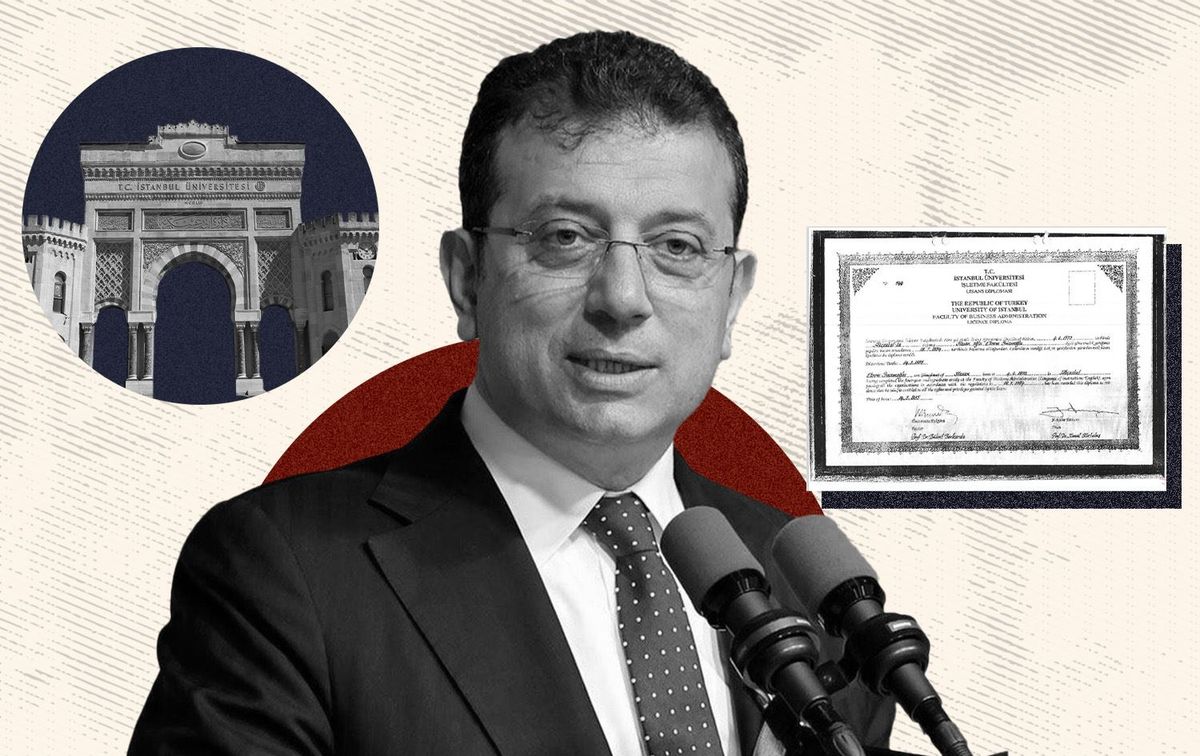
On March 19, in the early hours of Wednesday morning, the police raided the homes of İmamoğlu and 105 others to detain them. These names included İmamoğlu’s close advisors, business associates, and other mayors working under Istanbul Municipality. İmamoğlu's candidacy for the opposition CHP was set to formalize on March 23rd.
- Recommended read: Turkey’s pivotal moment: Presidential candidate İmamoğlu detained | Aposto World
These simultaneous detentions were made under two separate investigations: In the first investigation, İmamoğlu was described as the “leader of a criminal organization” and accused of corruption along with 99 other people. In the second investigation, an arrest warrant was issued for İmamoğlu and 6 others on charges of “aiding a terrorist organization”.
The governor’s office issued a statement at the same time as the arrests:
“All kinds of meetings, demonstrations and press statements have been banned for 4 days between March 19-23 in order to maintain public order throughout the province and to prevent any provocative actions that may occur.”
Access to social media platforms was also restricted.
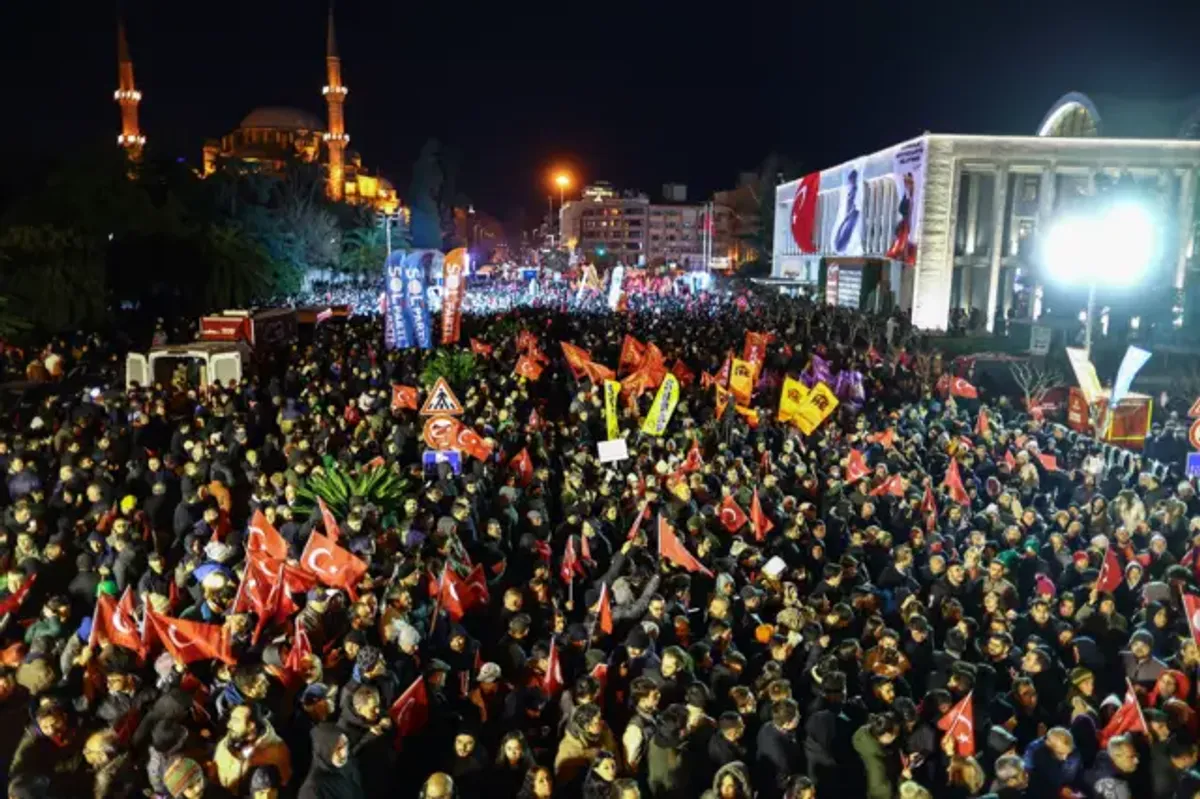
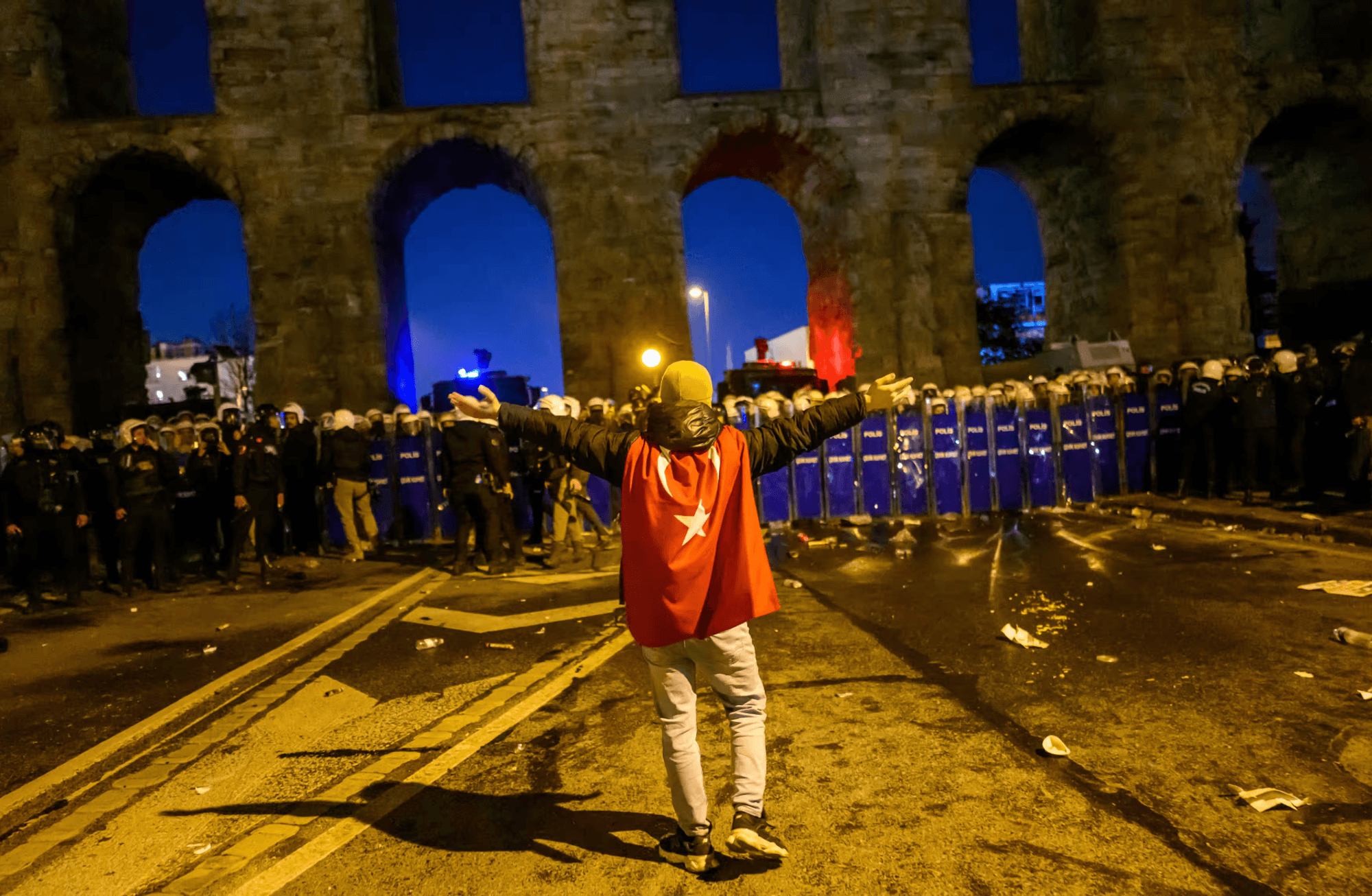
The first evening of protests at Saraçhane, March 19
The opposition has marked March 19 as a junta, or a coup; the markets tumbled, and the lira fell to record lows. In the evening, protestors started to gather at Saraçhane, where the municipal building is located. CHP also called its supporters there, and in the later hours, the police intervened to the crowds with force.
On March 20, the government seized the financial assets of İmamoğlu's family company. Later, media companies which broadcasted the protests were penalized for "violating broadcast policies" of the centralized broadcast commission, RTÜK.
In the evening, the protestors gathered at Saraçhane once again, reaching hundreds of thousands. CHP leader Özgür Özel made it clear that he was calling people to the streets to join the non-violent protests. In a speech, he vowed to "keep the struggle going until İmamoğlu is freed."
President Erdoğan spoke for the first time, saying that the protests were evil and the charges against İmamoğlu was legitimate.
On March 21, the gathering ban on Istanbul by the central government was extended to Ankara and İzmir, two other largest cities in the country. The opposition called for the whole country to use their democratic rights to protest.
As the result of an ongoing investigation, a court removed the president of the Istanbul Bar Association, İbrahim Özden Kaboğlu, and all board members from office, citing their statement on the deaths of two journalists in a December airstrike in northern Syria. This was seen as an extension of the government crackdown, as the Bar has been known to clash with Erdoğan's government on constitutional issues. Thousands of lawyers protested the decision.
That day, court documents showing İmamoğlu's testimony from his initial interrogation on corruption charges were released. They showed the prosecutors asking İmamoğlu about a number of testimonies from unnamed, "secret witnesses" rather than substantive claims or evidence.
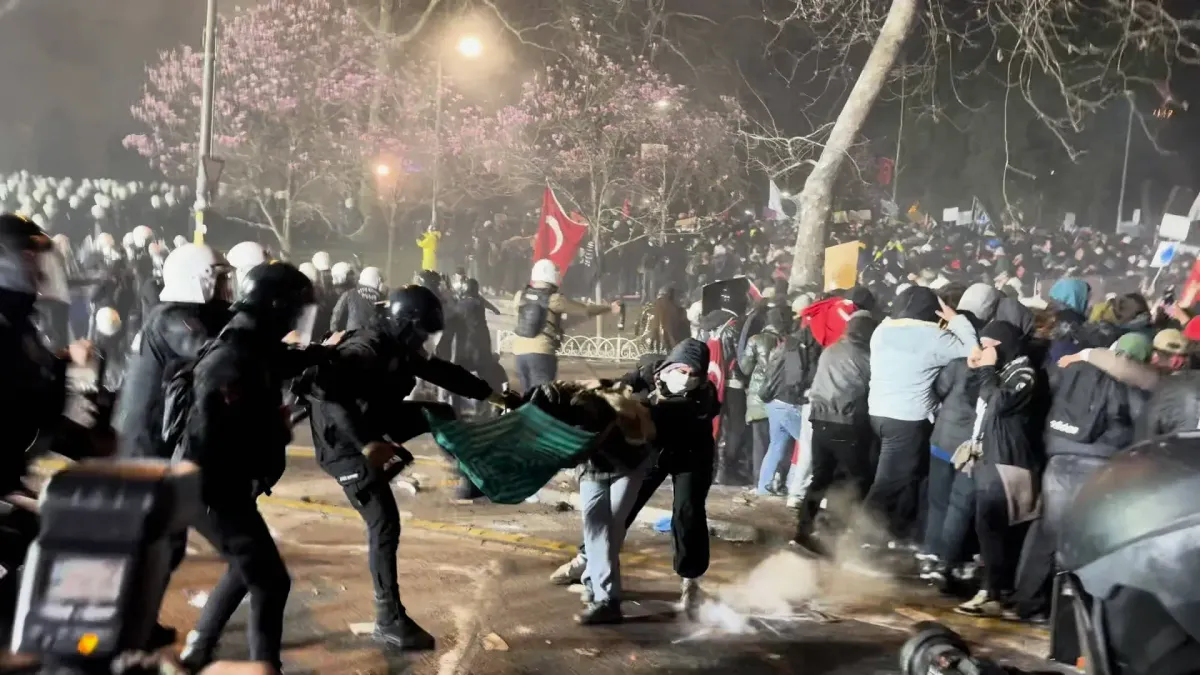
Protests at Saraçhane saw the largest crowds to day, and the police crackdown became more brutal. Saraçhane, March 21
On March 22, İmamoğlu was interrogated on terrorism charges. Again, claims from "secret witnesses" made up the bulk of the accusations. Erdoğan spoke again, saying "if you have the courage, let democracy run its course. The days where you could take to the streets along with leftist organizations, marginals, vandals to intimidate the national will are over.
Istanbul Governor extended the gathering ban in Istanbul for another 3 days, and banned anyone "suspected of joining the protests" from traveling to Istanbul.
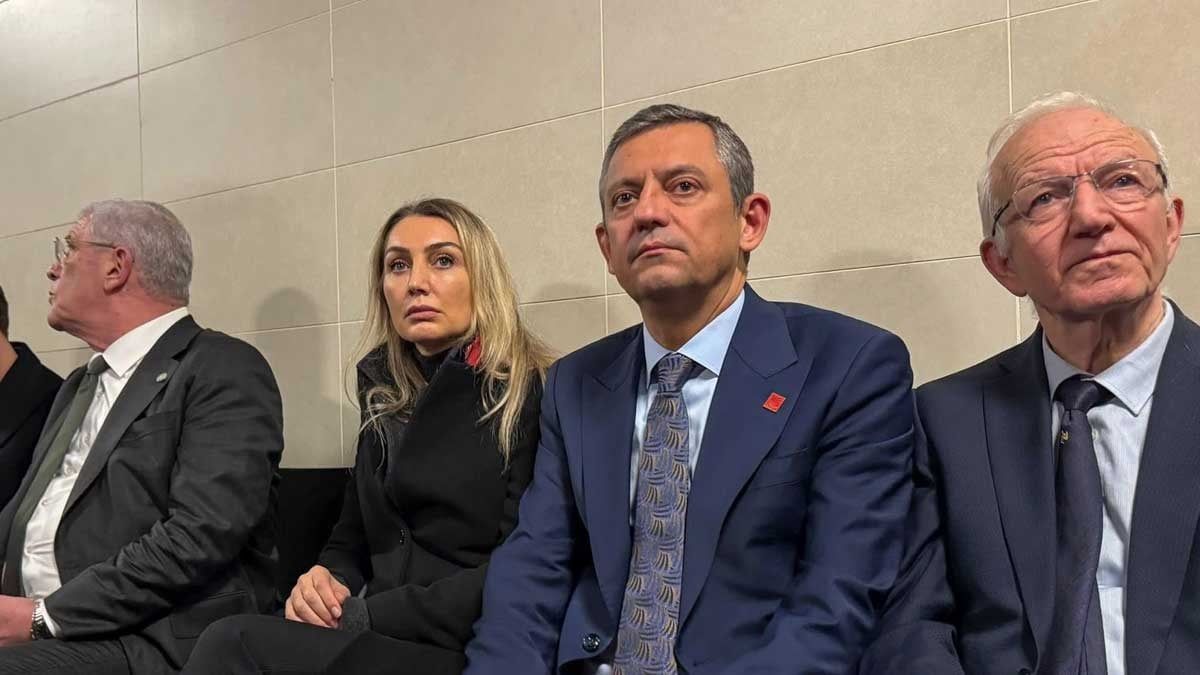
Dilek Kaya İmamoğlu (Ekrem İmamoğlu's wife), Özgür Özel (CHP leader), and İbrahim Kaboğlu (President of the Istanbul Bar Association who was removed from his position the day before) outside of the courtroom, waiting for the judge's decision. Çağlayan, March 22.
İmamoğlu's detention time limit was to expire a day later, and almost everyone spent the night awaiting news from the courthouse.
On March 23, the court ordered İmamoğlu and 48 others to be arrested on corruption charges. On terrorism charges, his trial would continue without detention. However, other district mayors were arrested on terrorism charges, and all were suspended from their duties. The government appointed new mayors in their place. İmamoğlu was also suspended from his position as Istanbul Mayor.
- The state news agency Anadolu was the first to report on the decision. What was confusing to media outlets worldwide was that the court had yet to rule. When Anadolu published the article announcing İmamoğlu's arrest, the court was still in session. This brought further skepticism around the fairness of the trial, with many asking "how does the state news agency know the decision before it has been made?"
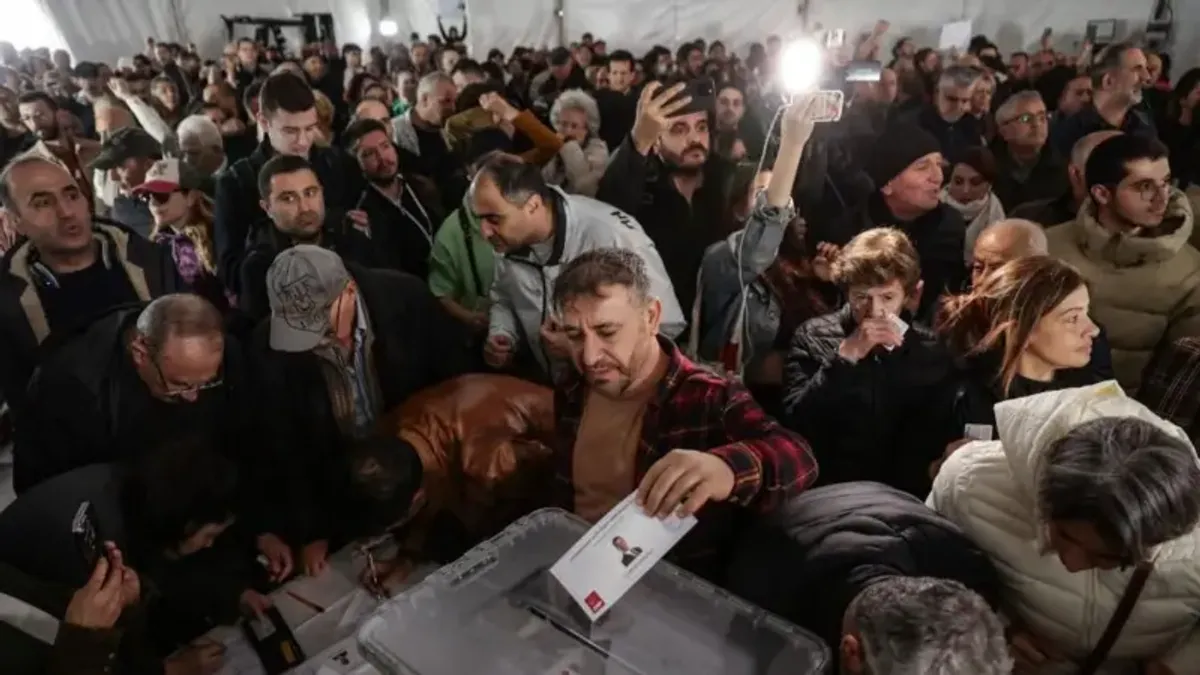
People voting in the CHP primary | Getty Images
Meanwhile, the opposition went ahead with the primary election to formalize its presidential candidate. With İmamoğlu arrested, and his name the only one on the ballot, the primary was symbolic, and yet following days of energized protests, over 15 million people, close to a quarter of the whole voting population, voted in the primary, either as party members or in solidarity and protest.
With overwhelming support for their arrested presidential candidate, CHP called for early elections.
In a statement posted on X's Global Government Affairs account, the social media company said it objects to "multiple court orders" from Turkish authorities to block more than 700 accounts belonging to news organizations, journalists, political figures and students.
X said it will be challenging the block requests in court, and adds that it "will always defend freedom of speech everywhere we operate". This comes amid accusations from the opposition that
On March 24, a new wave of arrests targeted the media, international as well as local: At least 10 journalists were detained. Interior Minister Ali Yerlikaya announced that at least a thousand people were detained since March 19.
That day, Turkey entered a new stage in protests: Boycotts.
University students called for an academic boycott and refused to attend classes. CHP leader Özel called for a targeted boycott of media outlets that refused to report on the protests, and companies associated with those outlets. He added that March 25 would be the last evening of protests in Saraçhane.
On March 25, the government seized the assets of three more companies that have worked with the Istanbul Municipality in the past. Meanwhile, university students took center stage again as they organized a large march to protest the government trustee of Şişli district, who replaced the elected mayor Resul Emrah Şahan.
Again, large crowds gathered at Istanbul's Saraçhane, Ankara, and in many other cities. These protests experienced police crackdowns. The total number of detainees rose to over 1500.
On March 26, President Erdoğan announced that the Ramadan Eid holiday, which was supposed to last until April 1, would be extended to cover the rest of the working week, meaning workers would have 9 days off. Some saw this as an incentive for people to go out on holidays rather than protesting.
On March 27, the government seized the assets of a dozen more companies and more individuals. Some people who were targeted were close associates of İmamoğlu, while others were only loosely connected to him. Broadcast board RTÜK announced further penalties against media outlets, TV and online, that broadcasted the pro-İmamoğlu protests. İmamoğlu's lawyer Mehmet Pehlivan was detained. The government blocked access to a website, and it reiterations, that listed the number of companies that CHP announced it would boycott.
CHP announced that its membership reached 2 millions, up from about 1.5 millions a month before.
BBC correspondent Mark Lowen was deported from Turkey after being arrested in Istanbul, where he was covering the protests.
On March 28, CHP held its largest ever rally in Maltepe Square: Party Chair Özgür Özel said that 2.2 million people attended. An AI-generated video showed İmamoğlu's image voicing a letter that he had written.
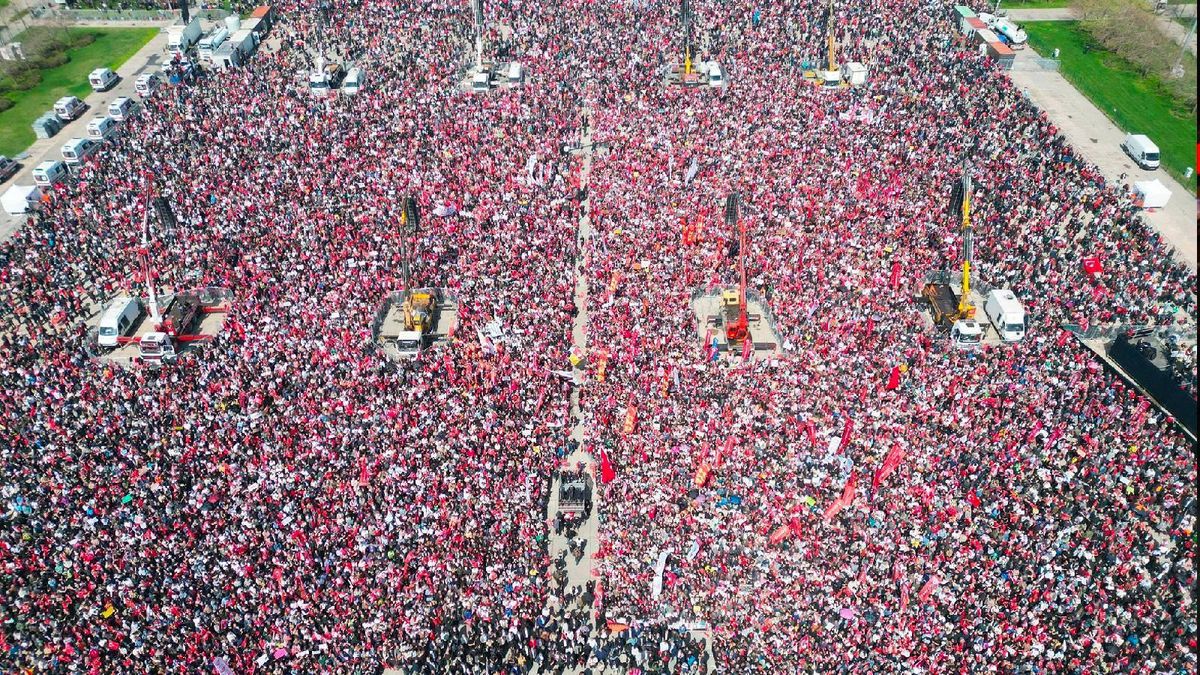
On a sunny Friday, millions gathered at Maltepe for Turkey's largest rally in recent memory, perhaps ever. Maltepe, March 28
CHP leader Özel also targeted Treasury and Finance Minister Mehmet Şimşek.
He claimed that Mehmet Şimşek “appears to be a democrat in the world stage, but with the coup report he had MASAK [Financial Crimes Investigation Board] prepare, he is a partner of this coup, a part of that junta.”
Özel said, "All economic circles around the world have seen that Mehmet Şimşek is not a democrat, not an economist who manages the country with rational policies, but a gunslinger under an autocrat, an autocrat's hitman. A person like Mehmet Şimşek has no credibility, nor does he have anything to contribute to this country from now on." Şimşek denied the accusations.
- Şimşek is a divisive figure: He is an orthodox economist who has been serving as the Minister of Treasury and Finance since 4 June 2023. He was the Deputy Prime Minister of Turkey from 24 November 2015 until the office's abolition on 9 July 2018. He previously served as the minister of finance from 2009 to 2015, a period that saw considerable economic growth. Well-liked by Western capital groups and monetary groups, he was brought back to the cabinet following a period where Erdoğan tried to combat inflation by lowering interest rates, an unorthodox approach that proved catastrophic. However, the policies that he advocates for has hurt the working class the most, and they haven't yet delivered on the economic success that he had promised.
On April 2, the call for a general boycott by university students—a call that the opposition announced it's support for—materialized. The aim was to stop all purchases throughout the country for a day. In affluent neighborhoods mainly inhabited by the supporters of the opposition CHP, the effects were visible: The streets were scarce with shoppers, the cafes and restaurants mainly empty, and dozens of establishments had closed their businesses for the day.
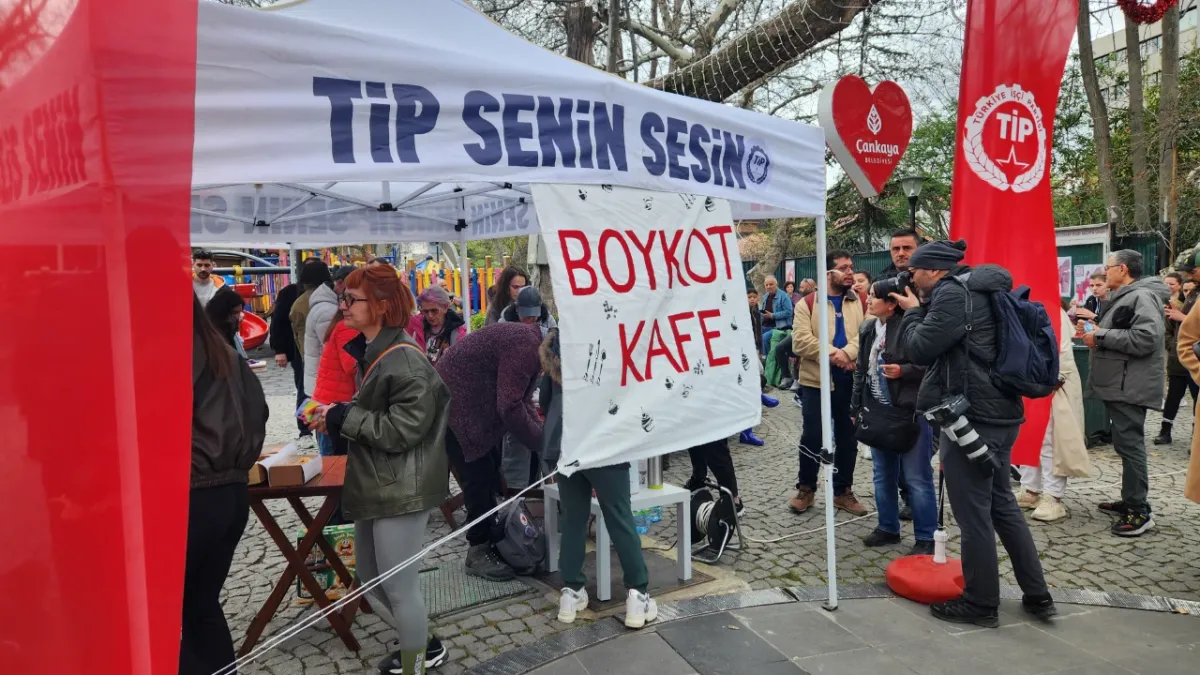
TİP, a leftist political party, as well as other citizen initiatives have installed "boycott cafes" in different parts of Istanbul and Ankara. Volunteers distributed coffee and tea free of charge, sho that people could socialize without breaking the boycott. Ankara, April 2.
A step back: Erdoğan had said earlier: “All kinds of sabotage against the Turkish economy, the welfare and peace of the nation will be held accountable before the judiciary. The fate of Turkey is intertwined with the fate of the AK Party.”
It's hard to say what the economic impact of the boycott was as government institutions have been unreliable in sharing data transparently. The state news agency reported that the boycott was ineffective, however, government ministers made it clear that they took the action seriously. The night before the general boycott, ministers appeared on pro-government networks and published statements to call the mass action "an act of economic terrorism" and "sabotage."
Furthermore, Istanbul Prosecutor's Office said that those calling for a boycott would be tried for "inciting hatred." In the morning, it was clear that these were no empty threats as famous actors who shared widely distributed social media filters supporting the boycott on their accounts were brought in for questioning. Many others who worked for TRT, the state television channel, were fired from the TV shows that they took parts in.
International reactions
The European Commission has urged Turkey to "uphold democratic values" as a country that is both a member of the Council of Europe and a candidate for joining the EU.
"We want Turkey to remain anchored to Europe, but this requires a clear commitment to democratic norms and practices," commission spokesperson Guillaume Mercier told reporters, according to the AFP news agency.
The Greek government also commented on the political situation of its neighbor, saying it was "worrying", adding that undermining the rule of law and civil liberties "cannot be tolerated".
Turkey's commitment to pursuing EU membership "sounds increasingly hollow" in light of Imamoglu's arrest, said Germany's foreign minister. In a post on X, external, Annalena Baerbock says a country that envisions its future in the EU "must uphold the rule of law". "Political competitors do not belong in prison or before the courts," she added.
Reaction from the US has been pretty dim, as US state department spokesperson Tammy Bruce said Washington “will not comment on the internal decision-making processes of another country”.
A spokesperson for the UN secretary general said they hoped “the normal rules for due process will be followed.”
Soner Çağaptay, a biographer of Erdoğan and an analyst at the Washington Institute for Near East Policy, said such statements were not likely to prompt any change in policy:
“There are unlikely to be any meaningful actions to follow; there will be no sanctions or disinviting Erdoğan to summits, declining to include Turkey in future planning. There will be no concrete repercussions, because of the way Turkey has positioned itself in this new global arena as an important power.”
What's next?
As the protests shifted from physical gatherings to coordinated acts of civil disobedience and economic resistance, some question whether the momentum will die down. However, the opposition CHP, which re-elected its current leadership in a show of confidence and unity on April 6, seems more energized than ever.
The emboldened Özel has announced that his party will hold rallies twice a week, one in Istanbul and one in another city, starting April 9.
There are talks of the general boycott becoming a weekly occurrence, taking place each Wednesday. A prospect of a mass strike is also within the realm of possibility for the first time in recent memory. University students are planning independent and spread out protests and they are asking for their peers and all jailed since March 19, and others who are imprisoned for what they say are political reasons, to be freed.
An indictment was prepared against 139 protestors, including 104 detained, on charges of “opposing the law on meetings and demonstrations” with a demand of up to 3 years in prison each. In a separate case, Istanbul Chief Public Prosecutor's Office demanded a political ban on 139 students in the indictment prepared against those arrested on March 25.
On social media there are more political posts than otherwise, and even though after 3 weeks some people are returning to their daily routines, there is also a campaign to "not normalize the feed."
Some background: People are not protesting simply against İmamoğlu’s arrest. Turkey’s democracy has been backsliding for over a decade, and the economy has suffered immensely over the past years. Turkey has one of the highest inflations, and the tight fiscal policy to combat it has hurt the working class the most. In short, people are getting poorer and less free; the events of past week, what the protestors see as an assault on their political will, has fueled the largest protests in a decade.


Kaydet

Okuma listesine ekle
Paylaş
Aposto WorldThis newsletter offers a comprehensive overview of global events from each continent, curated from diverse international media sources. On Mondays, you will receive Aposto World in your inbox and we will give you only the relevant information on just the important stuff, from an Istanbul perspective.
NEREDE YAYIMLANDI?
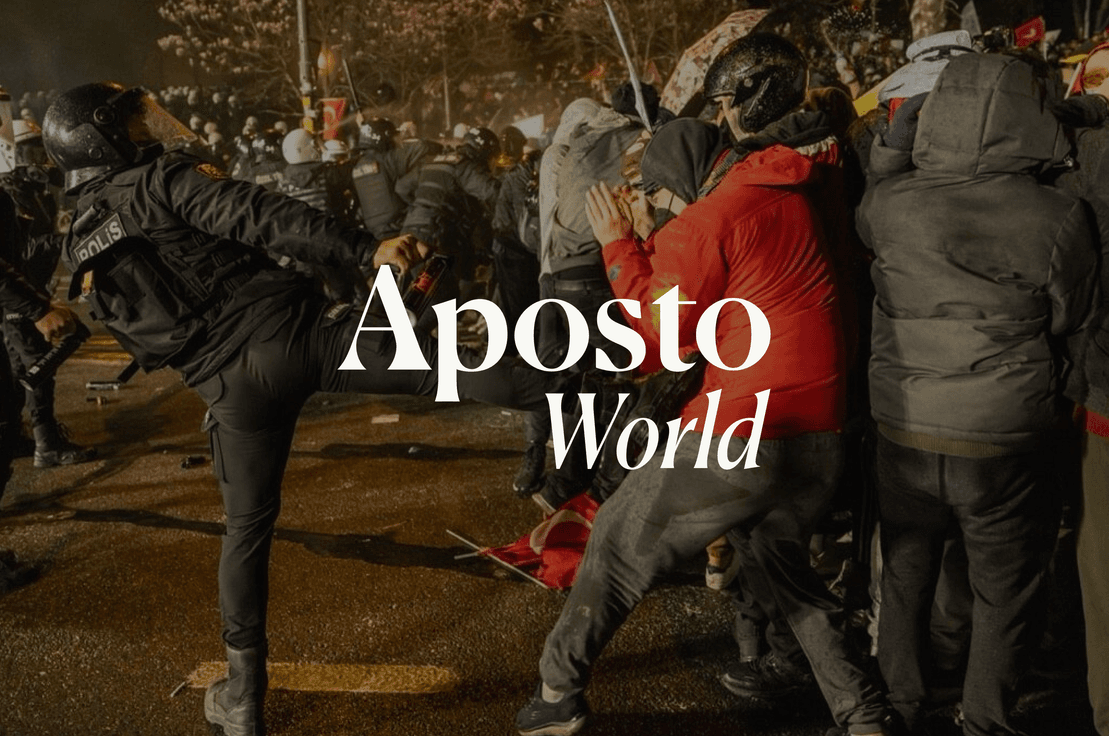
İmamoğlu arrested. Massive demonstrations. Judicial crackdown. Police brutality and tear gas. Biggest protests in a decade. General boycott. CHP leader re-elected, announces rallies.
08 Nis 2025
YAZARLAR

Alp Akiş
Politika Editörü
Aposto World
This newsletter offers a comprehensive overview of global events from each continent, curated from diverse international media sources. On Mondays, you will receive Aposto World in your inbox and we will give you only the relevant information on just the important stuff, from an Istanbul perspective.
İLGİLİ OKUMALAR
Anna Wintour has stepped down from her role as Editor-in-Chief of Vogue America, a position she has held for 37 years. But is this a farewell or merely a change of scene? When the person in question is a media figure who has shaped the industry around her with an iron will and her enigmatic persona behind black sunglasses, the developments naturally become all the more interesting.

This week, fires broke out in more than 300 locations across Turkey. The longest-lasting fires occurred in forested areas.
04 Tem 2025

Brad Pitt stars in F1: The Movie, which—despite its overwhelming product placement—delivers a whirlwind of excitement that fulfills all the promises of the entertainment industry and mainstream cinema.

Édouard Louis writes with ruthless clarity about his journey from a poor village in northern France to the Parisian intelligentsia, and the interest in his interview at the Moda Stage shows that he is no longer just a writer, but a phenomenon. For many, a Nobel Prize is just a matter of time. He seeks to use his pen to expose violence in a way that no one can escape. We sat down with Louis for a conversation that ranged from the price of classism to shame and the imagination of a new left.

Mamdani has achieved this not with disaster scenarios, conspiracy theories and a politics stuck in the present, but with a political horizon that embodies hope and a common future.
