




Anna Wintour's farewell: The fall of an empire once deemed unshakable


 Aposto World
This newsletter offers a comprehensive overview of global events from each continent, curated from diverse international media sources. On Mondays, you will receive Aposto World in your inbox and we will give you only the relevant information on just the important stuff, from an Istanbul perspective.
Anna Wintour has stepped down from her position as Editor-in-Chief of American Vogue, a seat she has held for 37 years. Wintour is arguably the most influential editor-in-chief in the cultural world—especially in fashion, which itself is a massive industry worth around $3 billion. In 2017, Queen Elizabeth awarded her the title of “Dame” for her services to the profession.
Over those 37 years, she built a power empire rooted in fear and distance, leaving a deep mark on both fashion journalism and the industry itself. A mysterious, consistent (as seen in the bob haircut she's maintained since she was 14), visionary, and often controversial figure—Wintour remains someone whose true identity is likely known only to her closest family. Capturing her essence in a single article is, in truth, no easy task. While many may not like her, few can deny the respect she commands. The roots of her transformation into something greater than herself—a symbol, a cultural code—run far deeper.
Even if you haven’t followed Wintour directly, chances are you’ve seen The Devil Wears Prada or at least heard that Meryl Streep’s character was based on her. Adapted from a book written by a former assistant, Wintour herself never denied the accuracy of the film’s portrayal.
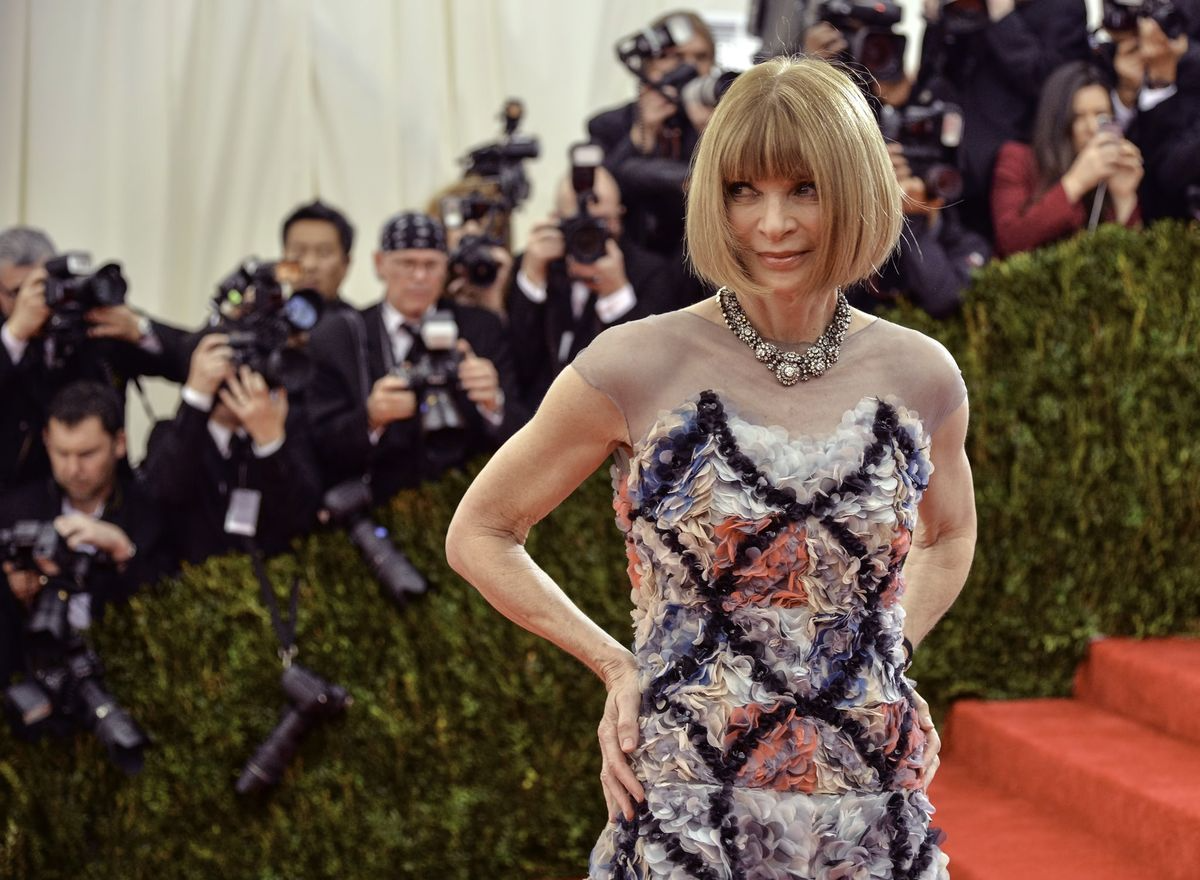
You're also likely familiar with the eye-catching themes and extravagant looks worn by celebrities at the annual MET Gala held at the Metropolitan Museum of Art in New York. But the Gala wasn’t always like that. It was Wintour’s vision that turned one of the world’s largest art museums into the backdrop for a global spectacle and a major fundraising night.
And then, there’s the legend of the September Issue… Anyone in the media industry knows that September issues aren’t just any issues—they carry iconic weight. In 2004, Wintour released an 832-page issue, elevating all future September editions to near-sacred status. The moment was so defining that it even became the subject of a 2009 documentary of the same name.
Continuing with Wintour’s traces on contemporary culture… If readers today are accustomed to seeing non-fashion figures or lesser-known models on magazine covers, they have Anna to thank. She was the one who brought major athletes into fashion shoots and placed them at the heart of popular culture. Her efforts to show that sport could be just as stylish and high-fashion—through figures like Rafael Nadal, Roger Federer, and Serena Williams—paved the way for what we now take as completely natural.
in the 1990s Wintour was also featured music icons like Madonna and Grace Jones, brought actress Nicole Kidman to the cover before she had achieved global fame, and more recently spotlighted cultural and political powerhouses like Oprah Winfrey and Michelle Obama. In doing so, she turned fashion into a natural extension of art, cinema, music, sports, and pop culture.
With a near-supernatural instinct for charisma, talent, and potential, Wintour helped launch the careers of young designers like John Galliano, Jean Paul Gaultier, Alexander McQueen, and Marc Jacobs. She also recognized and championed the commanding runway presence of models like Naomi Campbell and Gisele Bündchen, propelling them to iconic status.
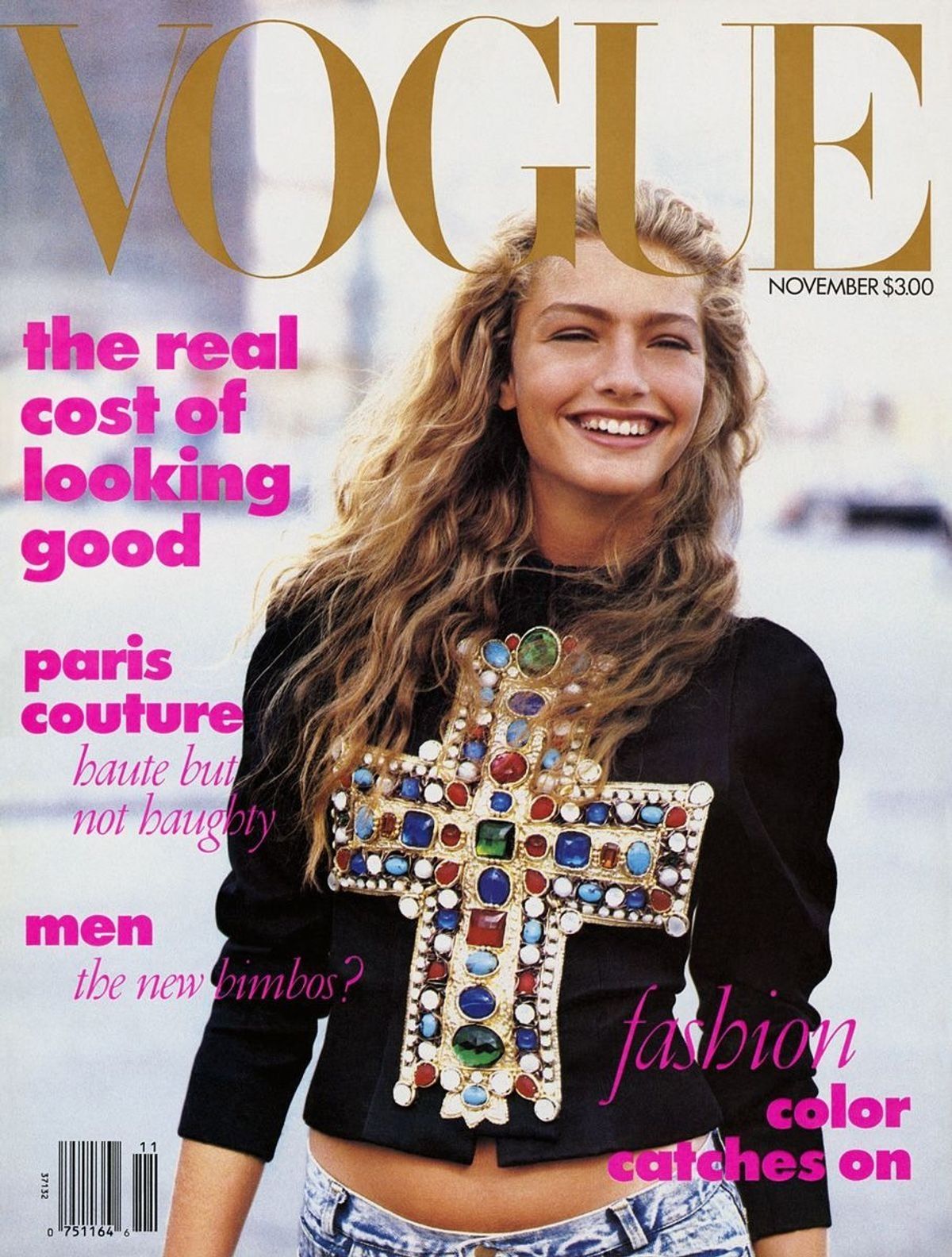
She had already signaled a radical shift with the very first Vogue cover she released after taking over as editor-in-chief in 1988. Up until then, Vogue’s covers had resembled meticulously composed paintings—strict, elitist, and orderly. But that changed with a striking image: an unknown model, eyes half-closed, hair tousled, captured in a fleeting, everyday moment that somehow felt both bohemian and luxurious.
By pairing high-fashion Christian Lacroix designs with what could be considered a middle-class Guess denim, she not only introduced jeans to the cover of Vogue for the first time but also disrupted traditional notions of style, challenging what was deemed right or wrong. That same cover also ushered in a new era of narrative fashion photography. It opened the door for visionary creatives like Steven Meisel, Peter Lindbergh, Ellen von Unwerth, and Annie Leibovitz to merge photography with modern cultural storytelling.
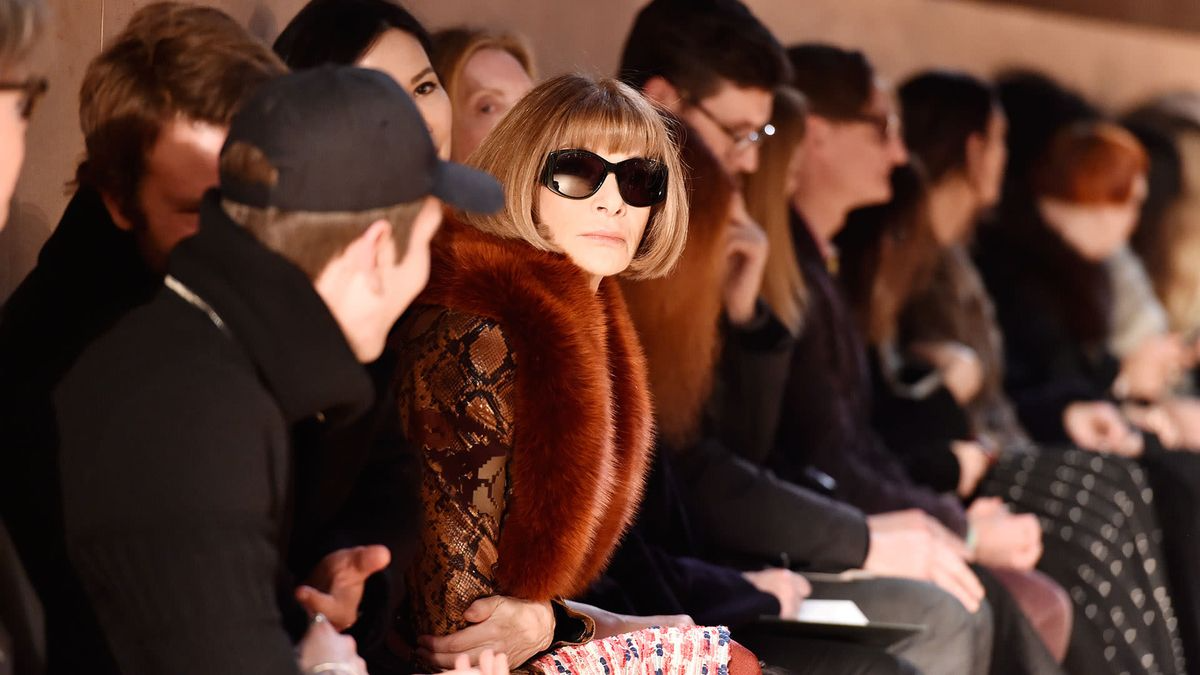
Wintour is fascinating in another way too: her signature style—floral dresses, short chunky necklaces, the same bob haircut, black Chanel sunglasses, and a muted color palette—has never changed, not for a single day. She set trends firsthand but never followed them herself. She remained consistent while modernizing everything around her. She always carried an air of elitism, living and behaving accordingly, yet she was the first to bring high fashion down from its ivory tower and into the streets. By styling luxury and the ordinary side by side, she redefined what it meant to be a fashion editor.
She shattered many ossified norms one by one, yet never allowed any of them into her own world.
She never came down to the street, never became mainstream— she always looked down upon the world. But she never tried to pull fashion up there with her. She created a persona that felt anything but worldly, yet she accepted the world’s realities with a striking clarity—and at times, she was the one who created those very realities.
The Last Editor-in-Chief
While Anna Wintour stepping down from the role she has become synonymous with rightfully made headlines, this isn’t exactly a farewell—nor is it a retirement. What happened is this: following her departure, the Editor-in-Chief title was entirely removed from Vogue. It was replaced by the new role of “head of editorial content,” and whoever takes over will still report to Anna, who remains Vogue’s Global Editorial Director and Chief Content Officer of Condé Nast.
So in reality, Wintour has only “stepped away” from one of the three major roles she’s held since 2020. But she will still be the one shaping the game. While she said, “It will be a great honor to help the next generation of editors shake things up with their own ideas,” only time will tell how possible that truly is. I can’t help but wonder: could this decision, taken by a figure whose every move has always been meticulously calculated, simply be a continuation of the same performance? Given that Anna still holds the reins, it’s certainly a possibility.
After all, Wintour held this role for 37 years—through the MTV-dominated pop culture of the '80s, the print media reign of the '90s, the social media revolution of the 2010s, and into the TikTok age of the 2020s. That Vogue has remained as relevant as ever through this wild ride is not just a sign of great leadership—it’s also proof that she’s a great journalist.
Growing up in one of England’s most established families, in a household where journalism was a dominant force—her father and brother included—it’s no surprise she was among the first to define what “fashion journalism” could be. Wintour, who never completed formal education, made up for it by starting at 16 and building experience across countless publications.
For her, the matter has always been—and still is—crystal clear:
“You either get fashion, or you don’t. That’s it.”
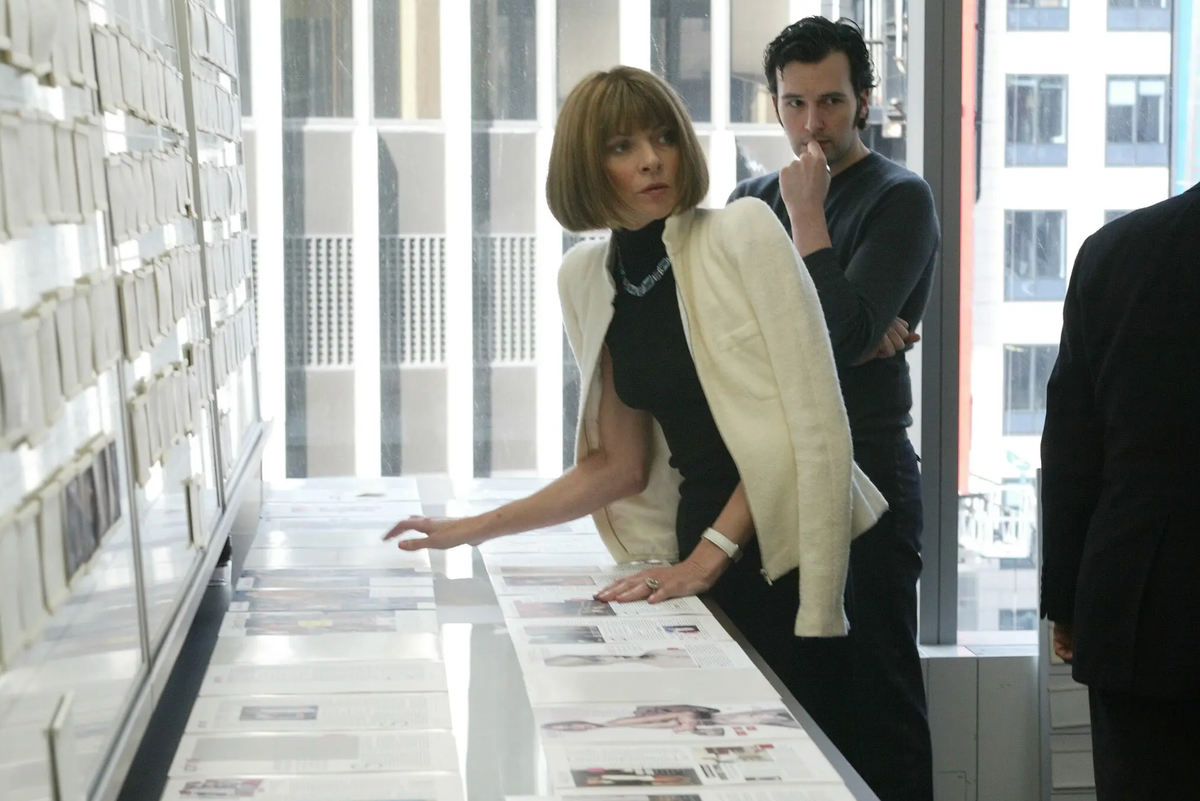
Trevor Perkins, one of the founders of PERK PR + Creative, once described Wintour as “a living, organic algorithm before algorithms were even a thing—the algorithm before algorithms.” It’s a definition that perfectly captures the sharp instinct Anna possesses for sensing trends and talent.
Whether it's the future direction of fashion movements, shifting perceptions of fame, which lifestyles are falling out of favor and which are gaining value, where creativity will yield the most financial return, or what new marketing strategies are on the horizon—Wintour has already worked it out in her head, or she’s the one who wrote the rules. She is not only an intuitive genius, but also a master of commercial intelligence.
Take the Metropolitan Museum of Art, for example—New York’s most prestigious museum had long possessed a vast wealth of content, but it was Anna who realized how to turn that into cultural capital. When she joined the event’s leadership in 1995, she transformed the MET Gala into a cultural phenomenon by making celebrity attendance essential. Framing the night not just as a visual spectacle but as a cultural summit, the gala raised $26 million in 2024 and $31 million in 2025—proceeds which were directed to the museum’s Costume Institute.
In 2003, she also co-founded the CFDA/Vogue Fashion Fund with the Council of Fashion Designers of America, enabling millions of dollars in support for emerging designers.
Wintour’s departure from her editorial seat at Vogue America may also reflect a broader cultural shift—one in which toxic work environments, bullying, and fear-based communication are no longer tolerated. Her strict, often domineering leadership style is no secret. The old order—where she alone decided who was “in” and who was “out”—no longer holds in any institution. In this new era, where power is expected to be shared, her decision to relinquish even a symbolic title no longer feels coincidental.
Fashion, like the world itself, is being reshaped by values such as personal expression, authenticity, and inclusivity. Just as Wintour once dismantled the existing game to build a new one, the industry now finds itself in need of another shake-up—this time within a digital landscape. Sooner or later, new Anna's will inevitably emerge. That much is certain.
But when it comes to Vogue, it seems that for quite some time, the pace of that change will move only as fast as Wintour allows it. She’ll remain behind the curtain, watching silently from behind her signature black sunglasses. She will still be the one arriving exactly on time to fashion week shows—and the first to leave. And everyone else will still take their cue from her: they’ll know the show is over only when Anna gets up.


Kaydet

Okuma listesine ekle
Paylaş
Aposto WorldThis newsletter offers a comprehensive overview of global events from each continent, curated from diverse international media sources. On Mondays, you will receive Aposto World in your inbox and we will give you only the relevant information on just the important stuff, from an Istanbul perspective.
İLGİLİ BAŞLIKLAR
YAZARLAR

Işık Cansu Canayak
Editör ve yazar. İstanbul Bilgi Üniversitesi'nde Uluslararasi İlişkiler okudu, Portekiz'deki Erasmus döneminin ardından New York'ta Radyo & TV yüksek lisansını tamamladı. Vogue Türkiye, Cumhuriyet, Sözcü, Vatan, Harper's Bazaar, Cosmopolitan, Maison Française, Hospitality Design gibi yayınlara uzun yıllar editörlük, yazarlık ve röportajlar yaptı. Ardından New York'a tekrar taşındı ve şimdilerde yine oraya geri dönmeye hazırlanıyor. Hayvanları, müziği, kelimeleri, denizi ve seyahat etmeyi her şeyden çok seviyor.

Aposto World
This newsletter offers a comprehensive overview of global events from each continent, curated from diverse international media sources. On Mondays, you will receive Aposto World in your inbox and we will give you only the relevant information on just the important stuff, from an Istanbul perspective.
İLGİLİ OKUMALAR

This week, fires broke out in more than 300 locations across Turkey. The longest-lasting fires occurred in forested areas.
04 Tem 2025

Brad Pitt stars in F1: The Movie, which—despite its overwhelming product placement—delivers a whirlwind of excitement that fulfills all the promises of the entertainment industry and mainstream cinema.

Édouard Louis writes with ruthless clarity about his journey from a poor village in northern France to the Parisian intelligentsia, and the interest in his interview at the Moda Stage shows that he is no longer just a writer, but a phenomenon. For many, a Nobel Prize is just a matter of time. He seeks to use his pen to expose violence in a way that no one can escape. We sat down with Louis for a conversation that ranged from the price of classism to shame and the imagination of a new left.

Mamdani has achieved this not with disaster scenarios, conspiracy theories and a politics stuck in the present, but with a political horizon that embodies hope and a common future.

Following the arrest of opposition presidential candidate Ekrem İmamoğlu, Turkey is undergoing weeks of political protests that are shaking up the country's political landscape.
