




Turkey’s main opposition party to determine its presidential candidate in March


 Aposto World
This newsletter offers a comprehensive overview of global events from each continent, curated from diverse international media sources. On Mondays, you will receive Aposto World in your inbox and we will give you only the relevant information on just the important stuff, from an Istanbul perspective.
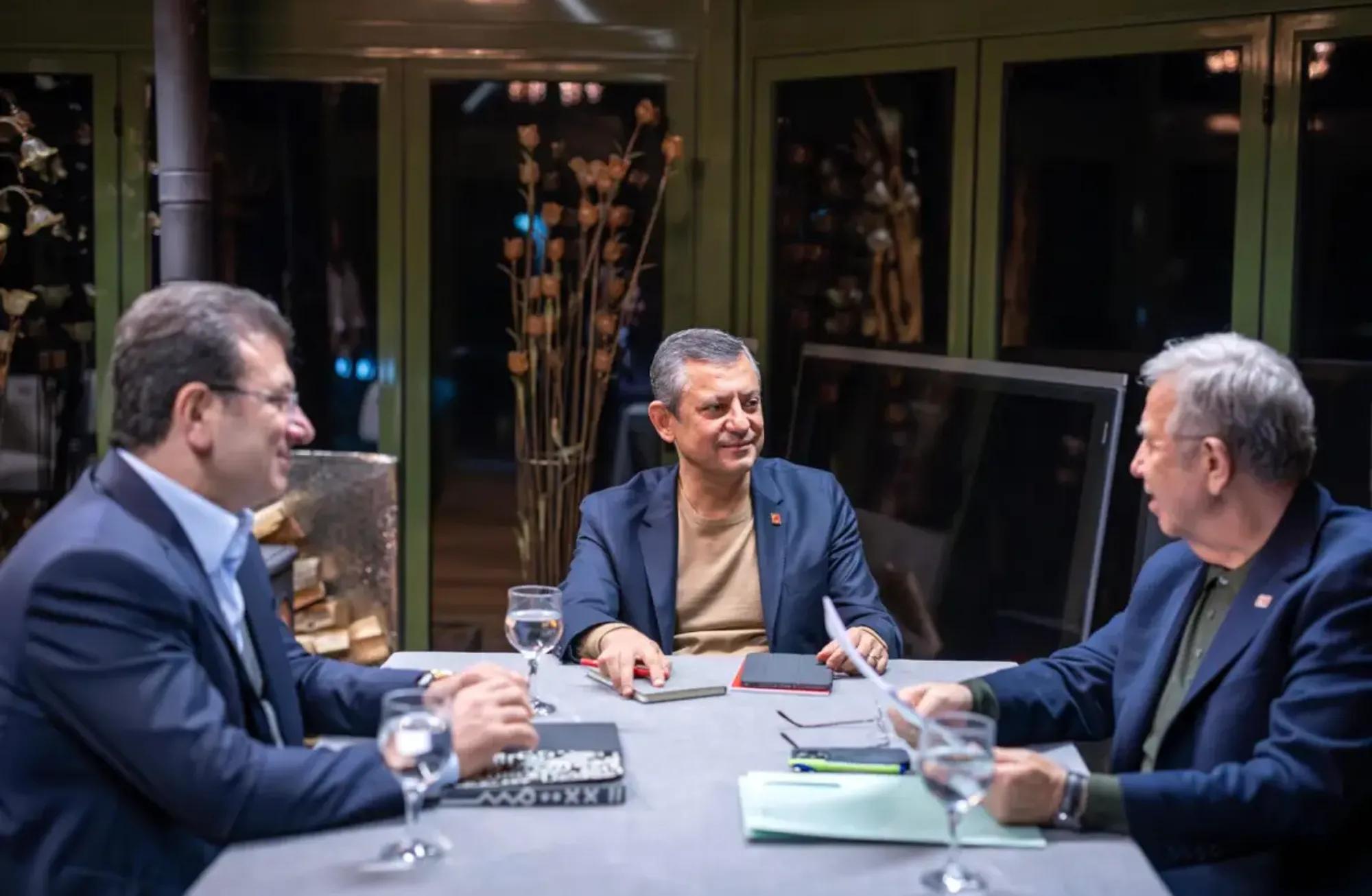
Turkey's main opposition party, CHP, announced that it will hold a party primary in March to decide who will be the party's candidate in the presidential elections scheduled for 2028. This brings further questions about the respective influences of potential candidates, as well as who will be on the ballot representing the long-ruling AK Party.
Turkey's major opposition parties had managed to form a wide alliance going into the 2023 presidential race. Many thought this would have sufficed to beat incumbent Erdoğan; the numbers from public opinion polls were on the side of the opposition.
Looking back on how the opposition alliance lost this election, many agree that they were too late to announce a candidate, and potentially wrong in their choice as well. In order to avoid the same mistake, the main opposition party CHP has announced that it would hold a party primary to determine its candidate for 2028.
The primary system is unprecedented in Turkey's mainstream politics, and while details are to be announced, what we know so far is that all 1.6 million party members will vote on March 23 to decide the candidate.
Some say that CHP is not avoiding the same mistake regarding choosing a candidate but repeating it, focusing on the issue too early rather than too late, potentially sowing discord among the party elite.
The debate around the opposition's candidate for 2028 has reignited another key question: Who will be the candidate of AK Party, which has been in power for 23 years under Erdoğan's leadership?
Turkey's constitution states that a president can serve two terms at most. That means that the current president, Recep Tayyip Erdoğan, cannot run for the office again.
In 2003, AK Party, founded by Erdoğan, won the general elections but Erdoğan had a political ban at the time, meaning he couldn't join the parliament. Instead, Abdullah Gül, an early ally and fellow founder of the party, assumed the role of PM. Later, Erdoğan's ban was lifted and he became PM in 2003. Turkey's constitution allowed a maximum of two terms for prime ministers, but since Erdoğan wasn't directly appointed as PM in 2003, he got to run for and win office in two other elections.
Reminder: All these were taking place prior to the constitutional referendum of 2010, when Turkey was a parliamentary democracy.
Erdoğan was elected again in 2007 and 2011, and served as PM until 2014. Due to the constitutional change of 2010, Turkey now elected its president through popular vote, as opposed to a vote amongst parliamentarians.
Barred from running again for prime minister, in 2014 he stood for the largely ceremonial role of president in unprecedented direct elections.
In another referendum in 2017, one that took place under a state of emergency following a coup attempt by Gülenists, the constitution was changed yet again to transfer the powers of the prime minister to the president.
This change made Erdoğan Turkey's first president to hold extensive powers under the new super-presidential model of government; one that critics warned would allow Erdoğan to consolidate power and turn autocratic. Erdoğan ran for, and won, the presidency in 2018.
Under this new constitution, the president could serve no more than two 5-year terms in power. However, pro-Erdoğan constitutional scholars argued that when he was first elected president in 2014, the scope of presidential powers was different, meaning the role itself had changed. Therefore, he wouldn't be running for the same office for a third time.
The constitutional court, whose members were largely appointed by Erdoğan—directly and indirectly—agreed with this point, paving the way for a third presidential term that would last until 2028. He won the presidency again in 2023.
Now there is no longer a gray zone that could allow Erdoğan another presidential term. Under the current constitution, Erdoğan is ineligible to run for president in 2028. But there are still two legal ways forward that could grant Erdoğan yet more years in power: Another constitutional change or an early election that would render his current term incomplete.
Both these options are on the table and are shaping current politics of Turkey in a major way.
Who has a chance?
In the 2023 presidential elections, the opposition managed to form a grand coalition of 6 political parties, called "The table of six", that agreed to oppose Erdoğan together in order to return Turkey to a parliamentary democracy. This coalition announced Kemal Kılıçdaroğlu, then the head of Turkey's main opposition party CHP, as their candidate with very little time until the elections.
Kılıçdaroğlu didn't enjoy the highest popularity among opposition figures, and neither did he charm crowds or inspired excitement, but polls still showed that he would win against Erdoğan. Some saw Kılıçdaroğlu's candidacy as a mistake, yet others as the result of political horse-trading among the political elite. In any case, Kılıçdaroğlu lost the elections and later the leadership of his party.
CHP's new leader would be Özgür Özel, a pharmacist and the former spokesperson for the party. However, many believed the charismatic Istanbul Mayor Ekrem İmamoğlu to be the champion of change in the party, and the one responsible for convincing the party delegates to choose Özel over Kılıçdaroğlu.
Ekrem İmamoğlu
CHP's İmamoğlu is easily the politician that creates the most excitement in the public. His critics say that he spends more time serving his own political career than he does acting as a mayor to improve the lives of 20-million-strong living in Istanbul.
He clenched the powerful office of Mayor of Istanbul, one that Erdoğan himself used to hold, from the ruling AK Party back in the local elections of 2019. Since that first election, he was Erdoğan's primary target. In a scandalous decision, the election board asked for the Istanbul election to be repeated, and Imamoğlu won the second election with a much wider margin.
He was elected as Mayor again in 2023 but his time in office is marked by a myriad of lawsuits directed against him, the municipality, and allies. In fact, he was put on trial for having insulted a public official. He was accused of calling the ones who canceled the Istanbul mayoral election of March 2019 "fools". The first hearing was in January 2022 and in December 2022 he was sentenced to 2 years, 7 months, and 15 days imprisonment and given a political ban in accordance with Article 53 of the Turkish Criminal Code. İmamoğlu has appealed the verdict, and his ban from politics does not apply as long as he is pending trial.
- Recommended read: Ekrem İmamoğlu under investigation amid crackdown | Aposto World
This verdict, and footsteps of more to follow, is the main objection against his candidacy. Not because potential voters see the trials as convincing but because if the appeals court confirmed the verdict with days or weeks before an election where İmamoğlu is on the ballot, this would leave the opposition without a candidate.
His proponents say that this case is not realistic, claiming that the public outrage would be too great for Erdoğan to consider this path. İmamoğlu himself has accused Erdoğan of orchestrating political prosecutions so that the long-serving Erdoğan would not have run against him.
Mansur Yavaş
While İmamoğlu is popular among opposition voters, there is one name that consistently surpasses him, and others including Erdoğan, in public opinion surveys: Mayor of Ankara, Mansur Yavaş, also from CHP.
Yavaş is a true contrast to İmamoğlu: While the latter delivers heated speeches, engages in political banter, comments on and sometimes sets the political agenda; Yavaş carries himself as a calm, moderate, reasonable statesman. Yavaş comes from a right-wing, nationalistic background. This makes him more popular amongst right-wing voters that normally wouldn't vote for traditionally center-left CHP.
There are mainly two factors that go against a Yavaş candidacy: The party primary and the Kurdish vote. Since CHP announced that it would hold a primary, Yavaş's chances for gaining the party's nomination seem slim. This is mainly because he doesn't come from a CHP background—he's a relative newcomer to the party and doesn't have strong support among the delegates. Especially if he were to run against İmamoğlu in the primaries, he would likely not come ahead.
The second reason is that many pro-Kurdish voters don't trust his right-wing, nationalistic background. Inside the current political landscape, which is subject to change, the opposition would need the support of pro-Kurdish voters if they are to prevail against Erdoğan.
Looking ahead
With the elections years away—on paper, the scenario could play out in a completely different way. A dark horse may emerge, for example, to champion the opposition; political alliances could be unmade and judicial sentences could be handed out.
However, the potential candidacy of these three names momentarily shape current politics, from party divides to paths that lead to constitutional change, such as the ongoing "peace process" between the government and the PKK.
- Recommended read: 'Peace process' underway: PKK head receives visit from MPs | Aposto World


Kaydet

Okuma listesine ekle
Paylaş
Aposto WorldThis newsletter offers a comprehensive overview of global events from each continent, curated from diverse international media sources. On Mondays, you will receive Aposto World in your inbox and we will give you only the relevant information on just the important stuff, from an Istanbul perspective.
İLGİLİ BAŞLIKLAR
YAZARLAR

Alp Akiş
Politika Editörü
Aposto World
This newsletter offers a comprehensive overview of global events from each continent, curated from diverse international media sources. On Mondays, you will receive Aposto World in your inbox and we will give you only the relevant information on just the important stuff, from an Istanbul perspective.
İLGİLİ OKUMALAR
Anna Wintour has stepped down from her role as Editor-in-Chief of Vogue America, a position she has held for 37 years. But is this a farewell or merely a change of scene? When the person in question is a media figure who has shaped the industry around her with an iron will and her enigmatic persona behind black sunglasses, the developments naturally become all the more interesting.

This week, fires broke out in more than 300 locations across Turkey. The longest-lasting fires occurred in forested areas.
04 Tem 2025

Brad Pitt stars in F1: The Movie, which—despite its overwhelming product placement—delivers a whirlwind of excitement that fulfills all the promises of the entertainment industry and mainstream cinema.

Édouard Louis writes with ruthless clarity about his journey from a poor village in northern France to the Parisian intelligentsia, and the interest in his interview at the Moda Stage shows that he is no longer just a writer, but a phenomenon. For many, a Nobel Prize is just a matter of time. He seeks to use his pen to expose violence in a way that no one can escape. We sat down with Louis for a conversation that ranged from the price of classism to shame and the imagination of a new left.

Mamdani has achieved this not with disaster scenarios, conspiracy theories and a politics stuck in the present, but with a political horizon that embodies hope and a common future.
